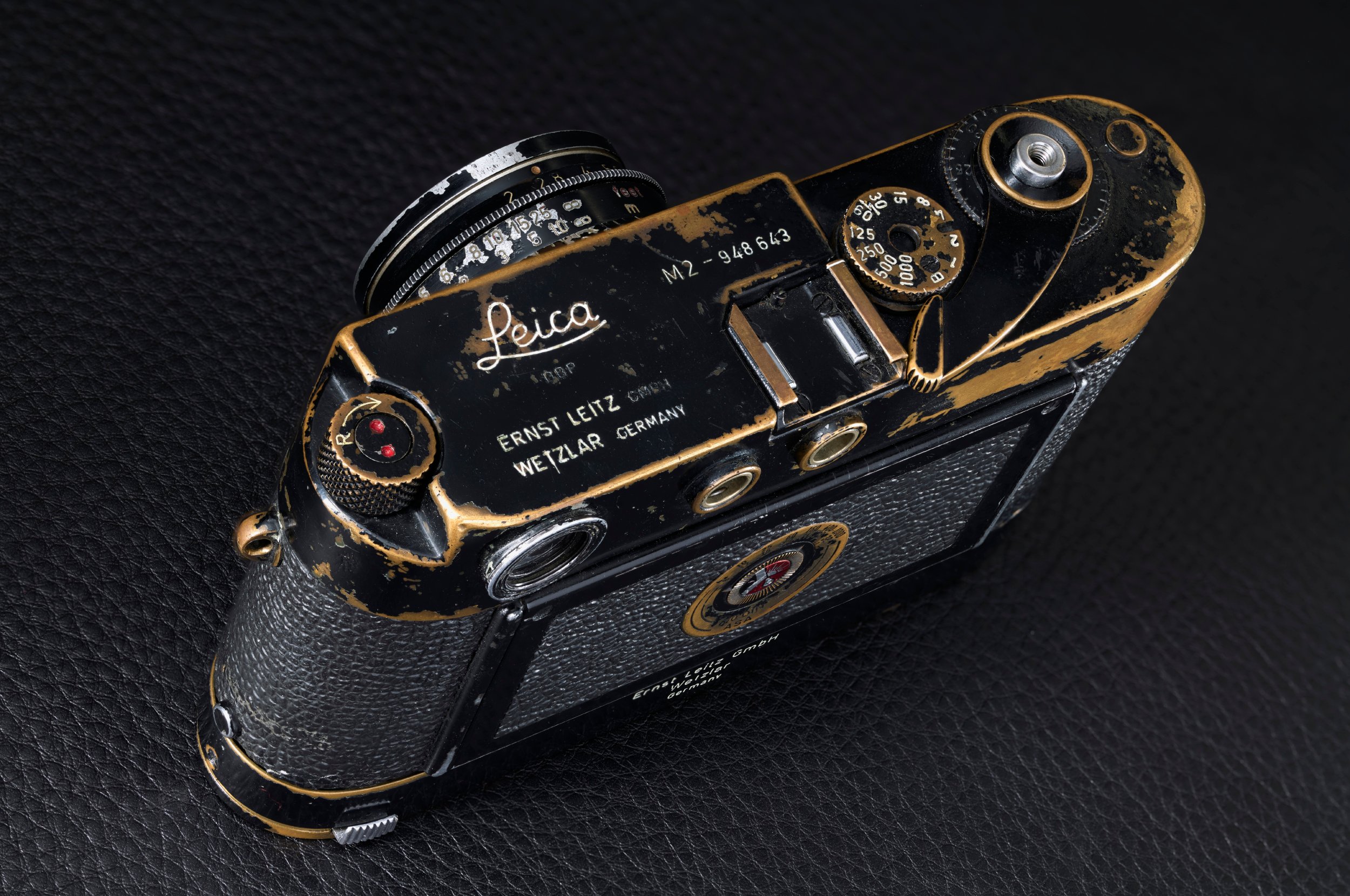
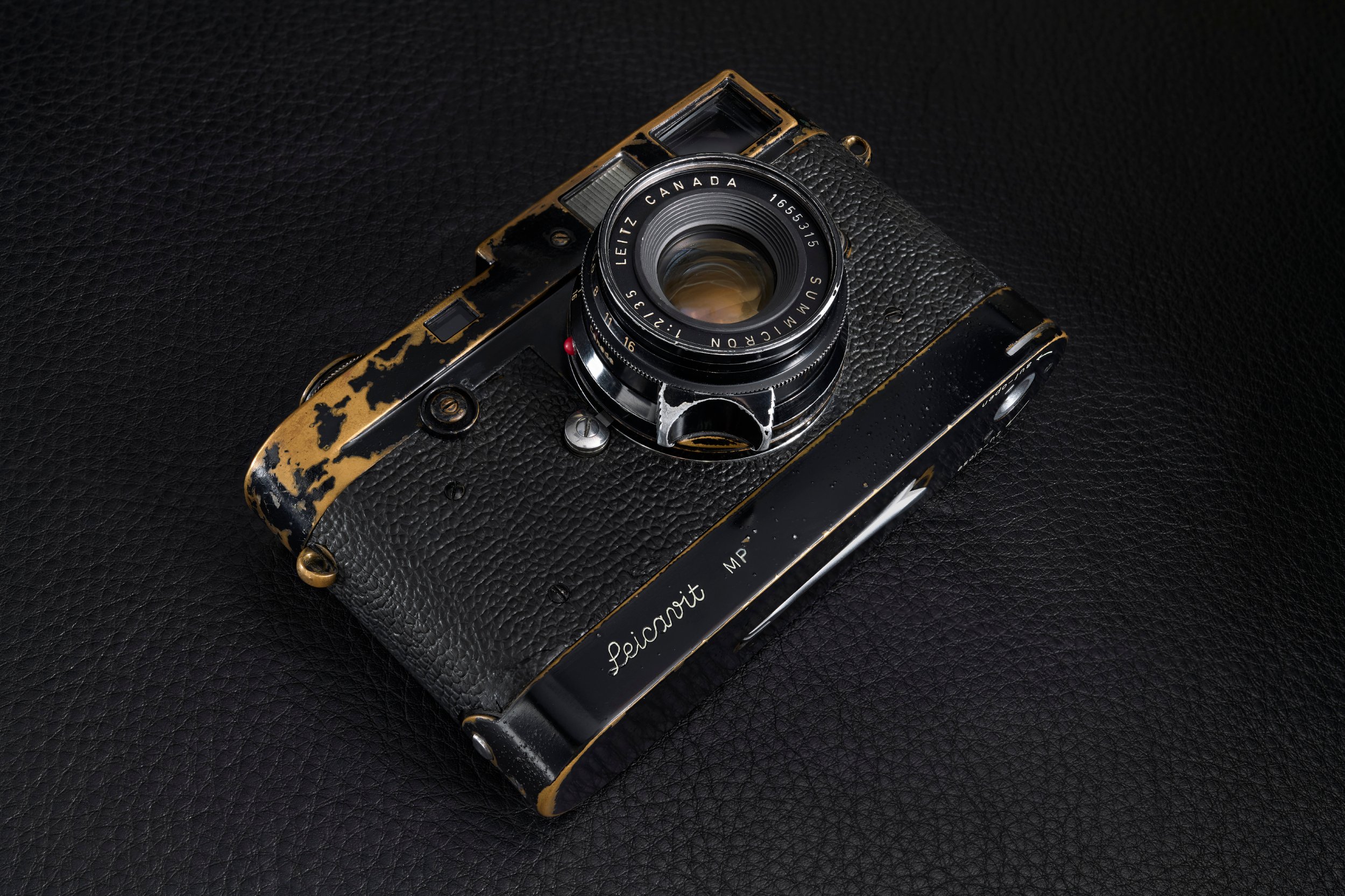
Some Leica M combinations are special not simply because of their rarity, but because of the details that brought them to life. This Leica M2 kit is one such example. An early black paint M2 paired with a matching Leicavit, its original baseplate, and a black paint 35mm f/2 Summicron 8-element lens.
Together, they represent a particularly fascinating moment in Leica’s history, as the M-series was still being defined, refined and poised for cultural permanence.
Serial number 948643 places this M2 within the very first production batch of black paint M2 cameras in 1958, which began with serial number 948601 and ran through 949100. This early production period is particularly significant for collectors, as it represents the only batch of black paint M2s equipped with the button-style rewind mechanism.
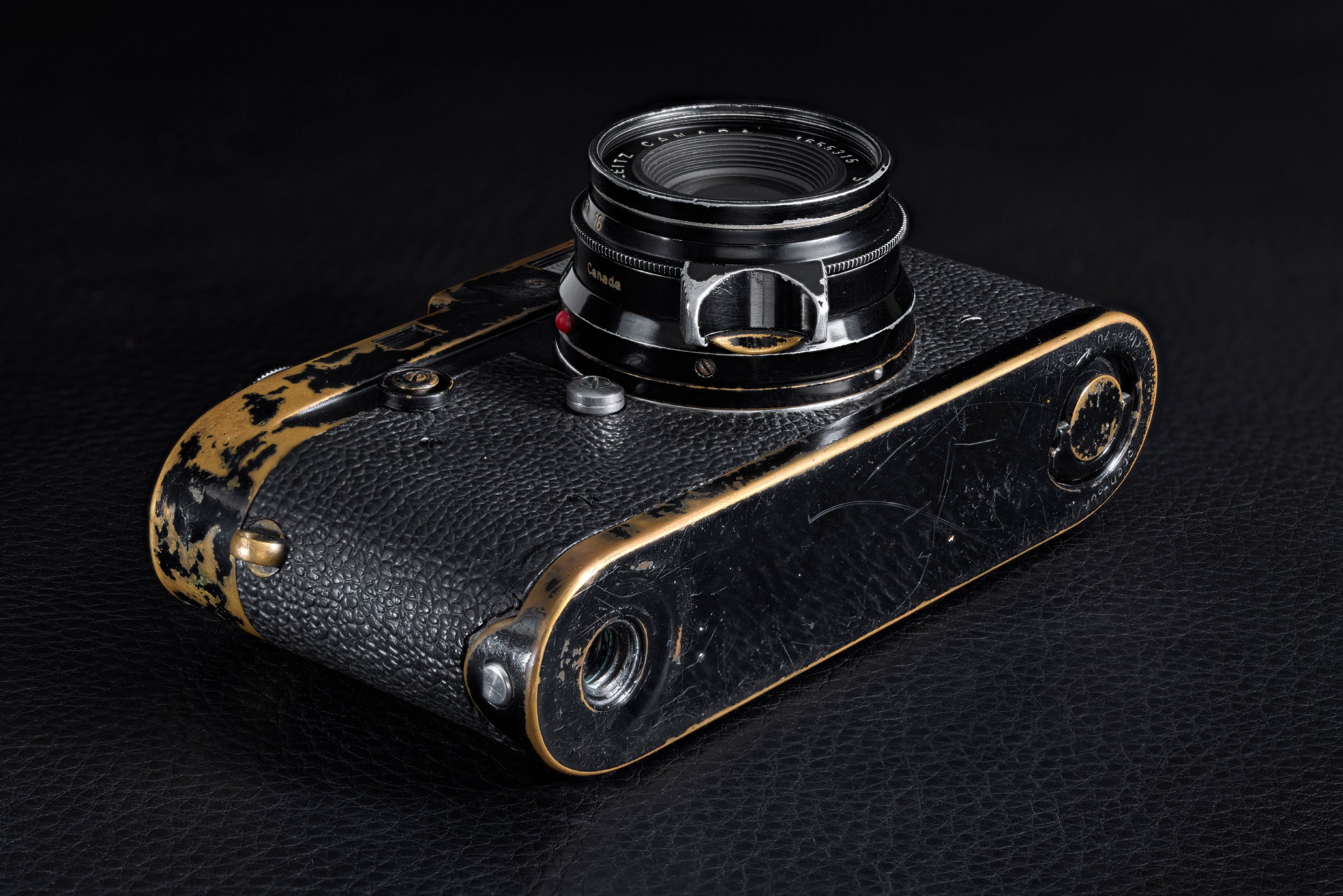
Although the initial batch comprised 500 cameras, only approximately the first 350 retained the button rewind configuration. Rarer still are examples featuring the all-black baseplate, complete with its black-painted locking lever. These baseplates are believed to have appeared on only the earliest 100–150 examples of the batch, as well as on pre-production black paint M3 cameras. Some of the final button-rewind examples we’ve encountered previously came from Magnum photojournalist Paul Fusco, though those cameras were no longer accompanied by their original all-black baseplates.
Finding one of these cameras with its original all-black baseplate is special in itself. Finding one accompanied by a matching Leicavit makes this particular set even more compelling.
This M2 also retains another important detail from its earliest production—the original glass viewfinder illumination window. Many examples were subsequently changed to plastic during service visits, making an original glass example increasingly desirable.
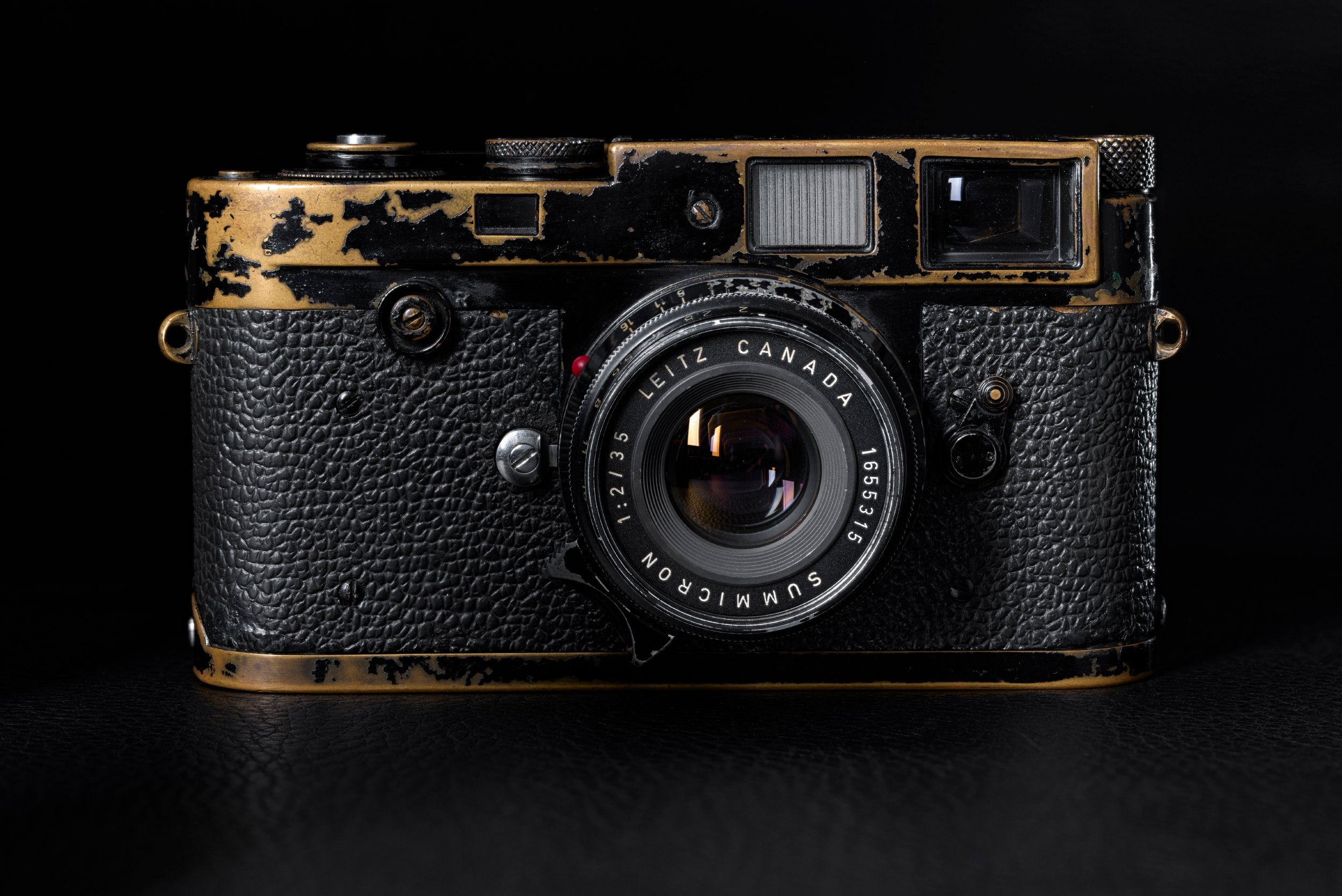
The lens accompanying this M2 is arguably just as extraordinary.
Serial number 1655315 identifies this 35mm f/2 Summicron 8-Element as a 1959 example. Introduced at Photokina in the fall of 1958, the 8-Element Summicron quickly became one of Leica’s most celebrated optical designs. However, a black finish was not offered as a standard catalog option until 1961.
This example predates that catalog offering and belongs to a much more exclusive group of early black paint lenses.
Initially produced to order, these lenses were made at the request of photographers associated with the Magnum Agency following the Photokina introduction. Unlike the later catalog versions, which featured an anodized black finish, these early examples were finished in black paint over aluminum.
There is also a particularly interesting mechanical detail on this lens. As noted by Dennis Laney in Leica Collector’s Guide, Volume 1, page 157, certain examples are occasionally found with a special factory-fitted screw-mount-to-bayonet adapter secured by a tiny screw. This lens retains precisely that configuration, adding another layer of historical interest to an already exceptional example.
The distinction between these early black paint lenses and the later anodized versions is significant. Beyond their rarity, the painted aluminum finish gives them a distinctive character that reflects an earlier period of Leica production.
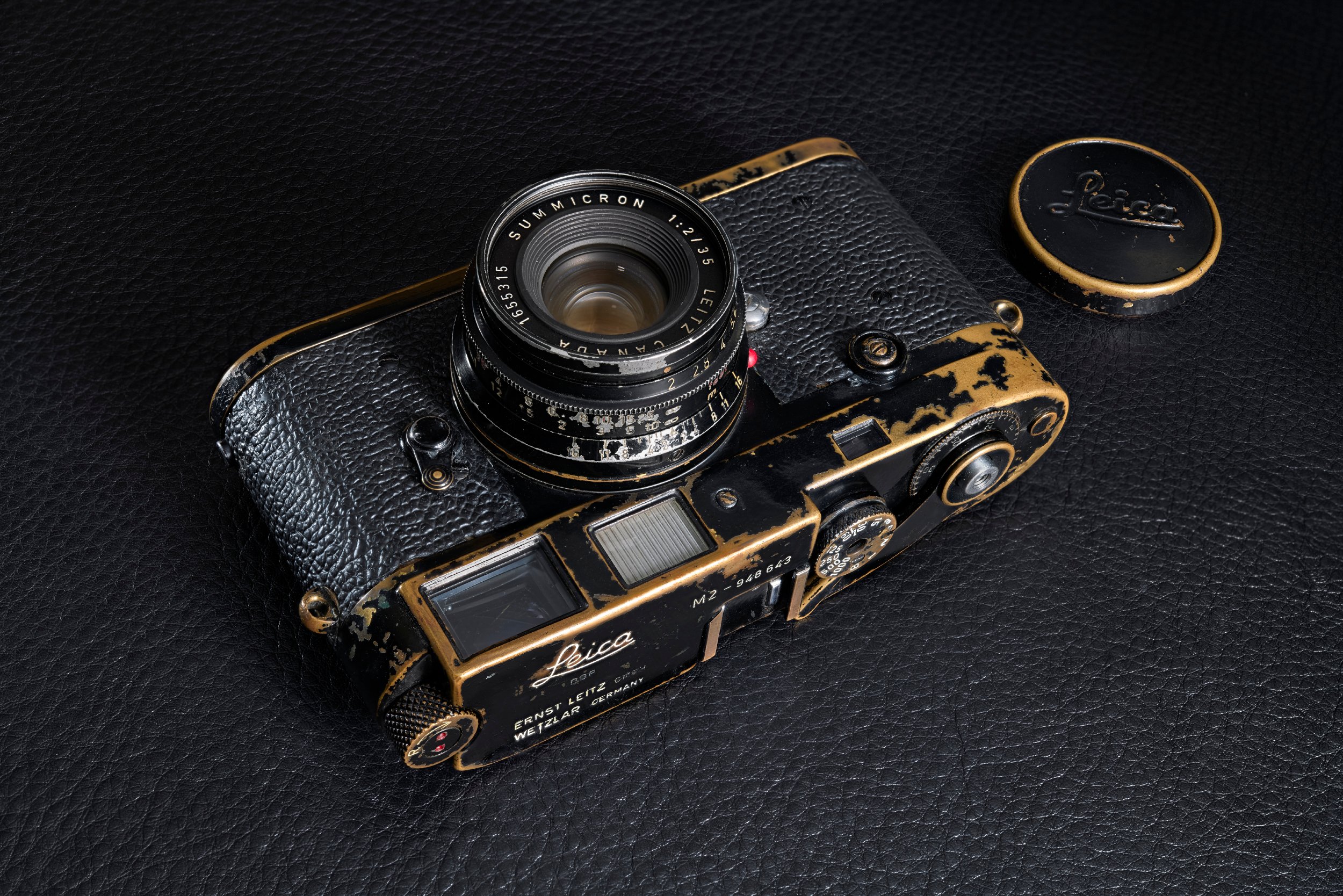
The history of this particular set is not entirely known. The camera and lens were clearly owned and used professionally, although the identity of the original photographer remains a mystery.
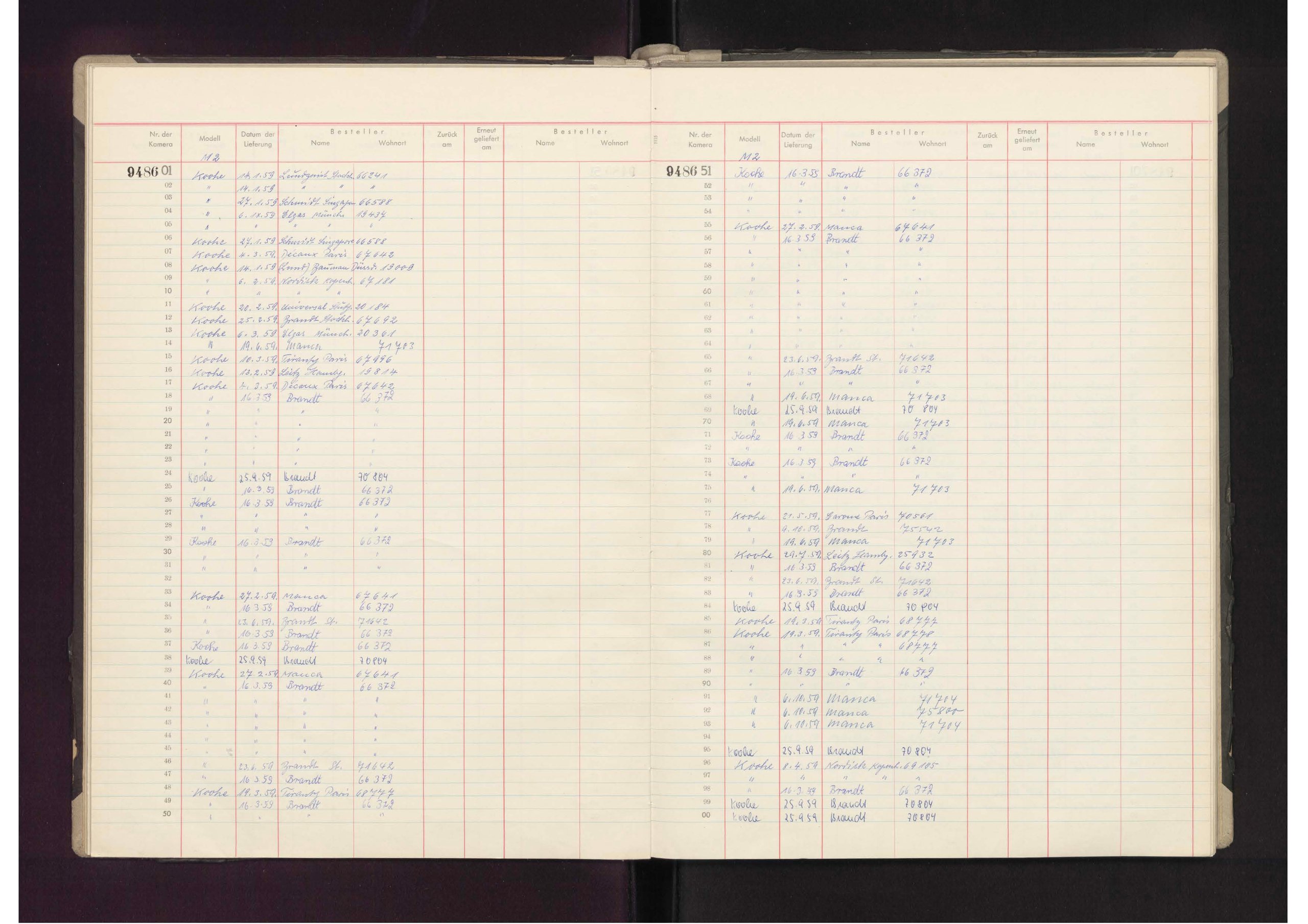
According to Leica’s delivery records, the camera was delivered to Brandt in Sweden in March 1958. Over the years, much of its original black finish was worn through use. At some point during a subsequent service visit, the camera appears to have been overpainted rather than fully repainted.
This overpaint method was not uncommon among early black paint Leica cameras. The finish was particularly susceptible to wear, and the challenges associated with maintaining it eventually contributed to Leitz’s development of the more durable black anodized finish.
Rather than detracting from its appeal, these details offer a glimpse into the working life of an early professional Leica. Its finish tells a story of use, service, and the evolution of a camera that was never intended to spend its life behind glass.
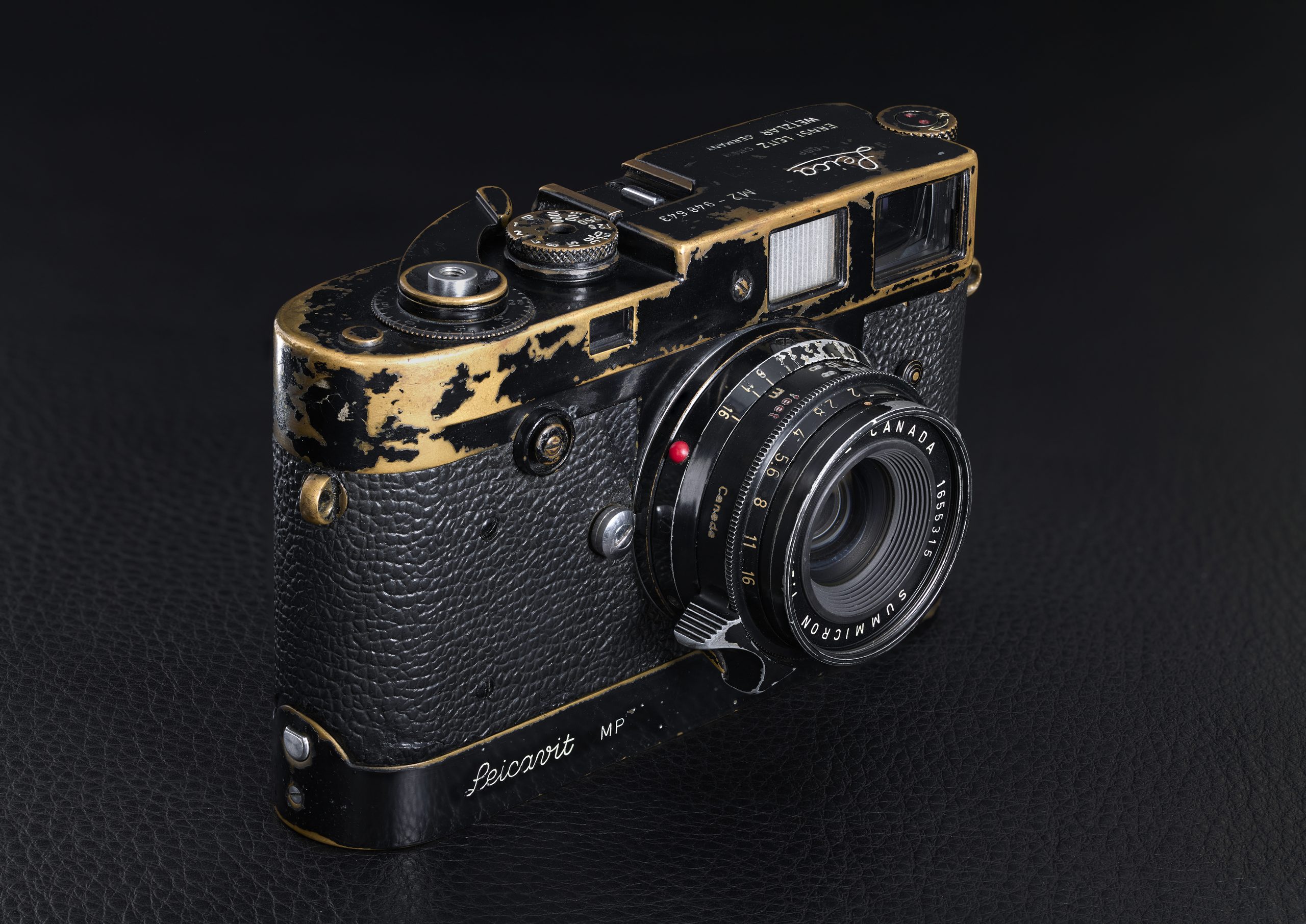
This combination of details rarely come together in a single offering—an early button-rewind black paint M2, its exceptionally rare all-black baseplate, original glass illumination window, matching Leicavit, and a pre-catalog black paint 35mm Summicron 8-Element. Each component has its own place in Leica’s history. Together, they form an unusually complete and historically significant pairing from the late 1950s.
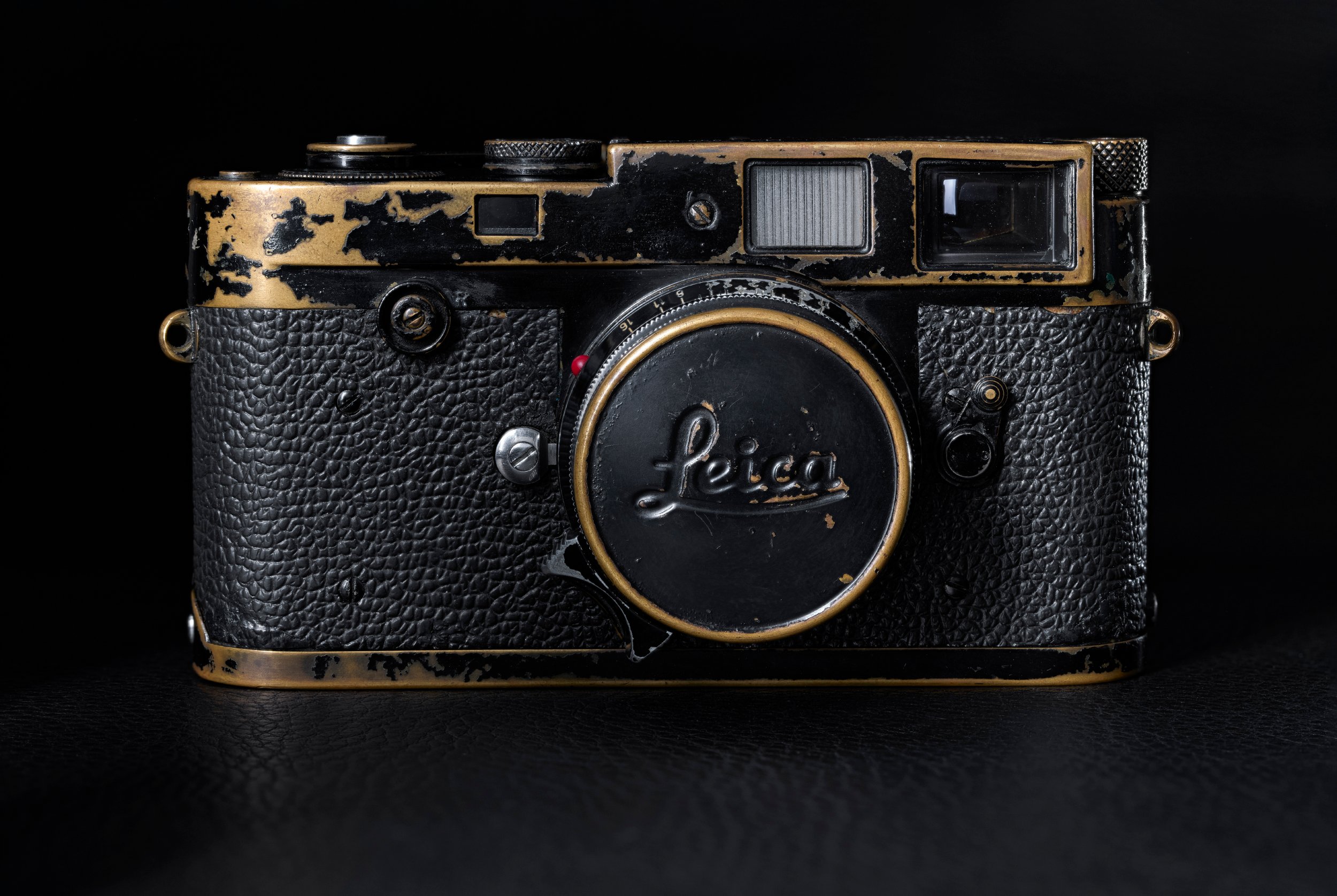
For collectors of early black paint Leicas, this is more than a rare camera and lens combination. It is a fascinating example of a period when Leica’s most interesting creations were often made outside the boundaries of its standard catalog.