Sinn U* Dive Watches Review
Sinn makes over-engineered watches from the financial city of Frankfurt, Germany. Some of their most recognizable models are their dive and mission timer watches. The collection is vast, but I want to focus on the dive U series in this post. Specifically the U1, U2, UX, and U1000. They all have common traits: black dial, white markers, and red accents. They all use Sinn’s tegimented steel case with black rubber and a small deployant clasp (also in tegimented steel).
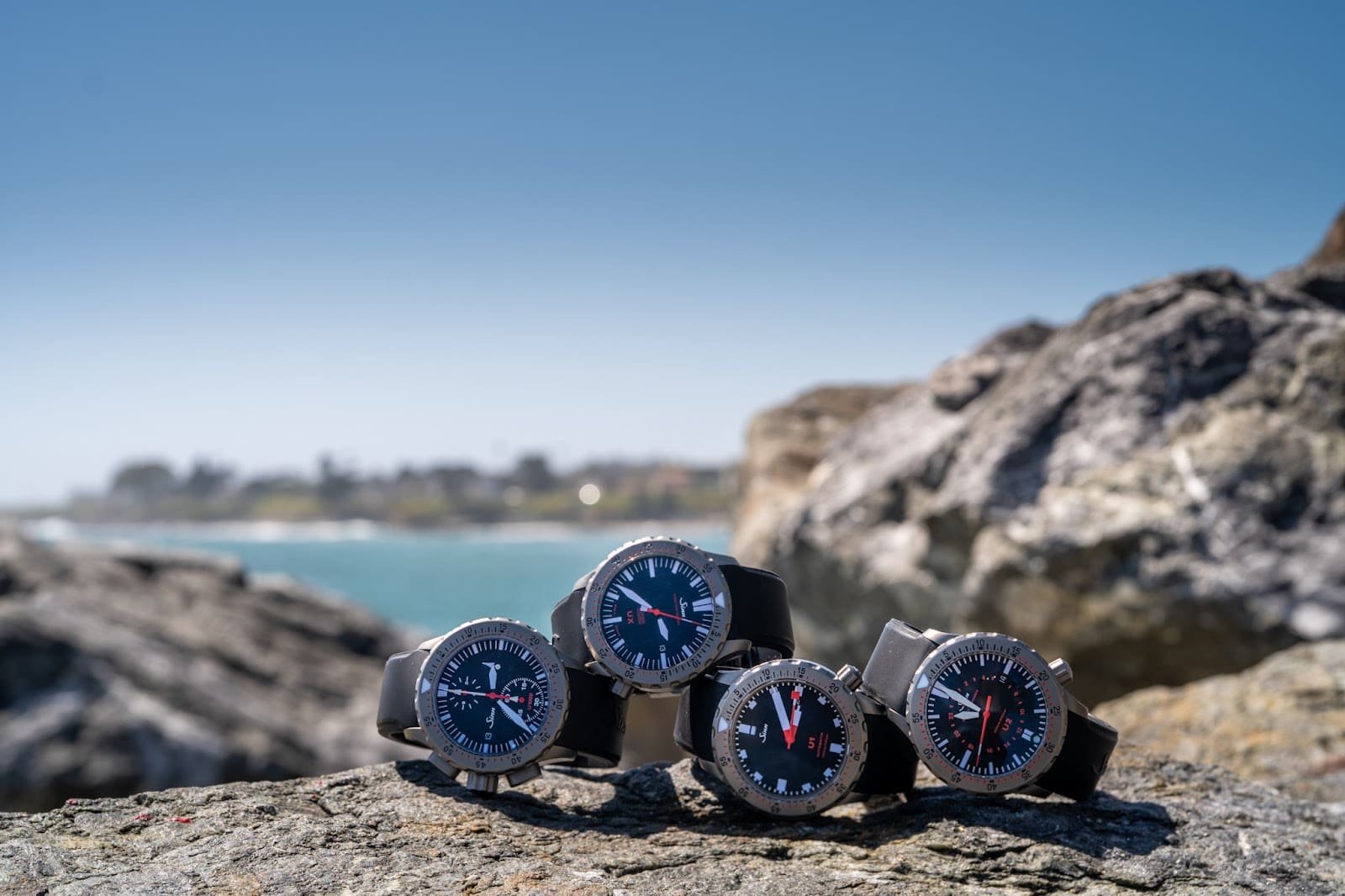
These Sinn watches have become my go-to watches for diving and for any occasion, and due to their robust construction, they are the watches I take with me when I am worried about my environment or doing an activity where I worry that my watch will be banged or scratched. Let’s explore why these Sinn watches have become my GADA (go anywhere do anything) watches.
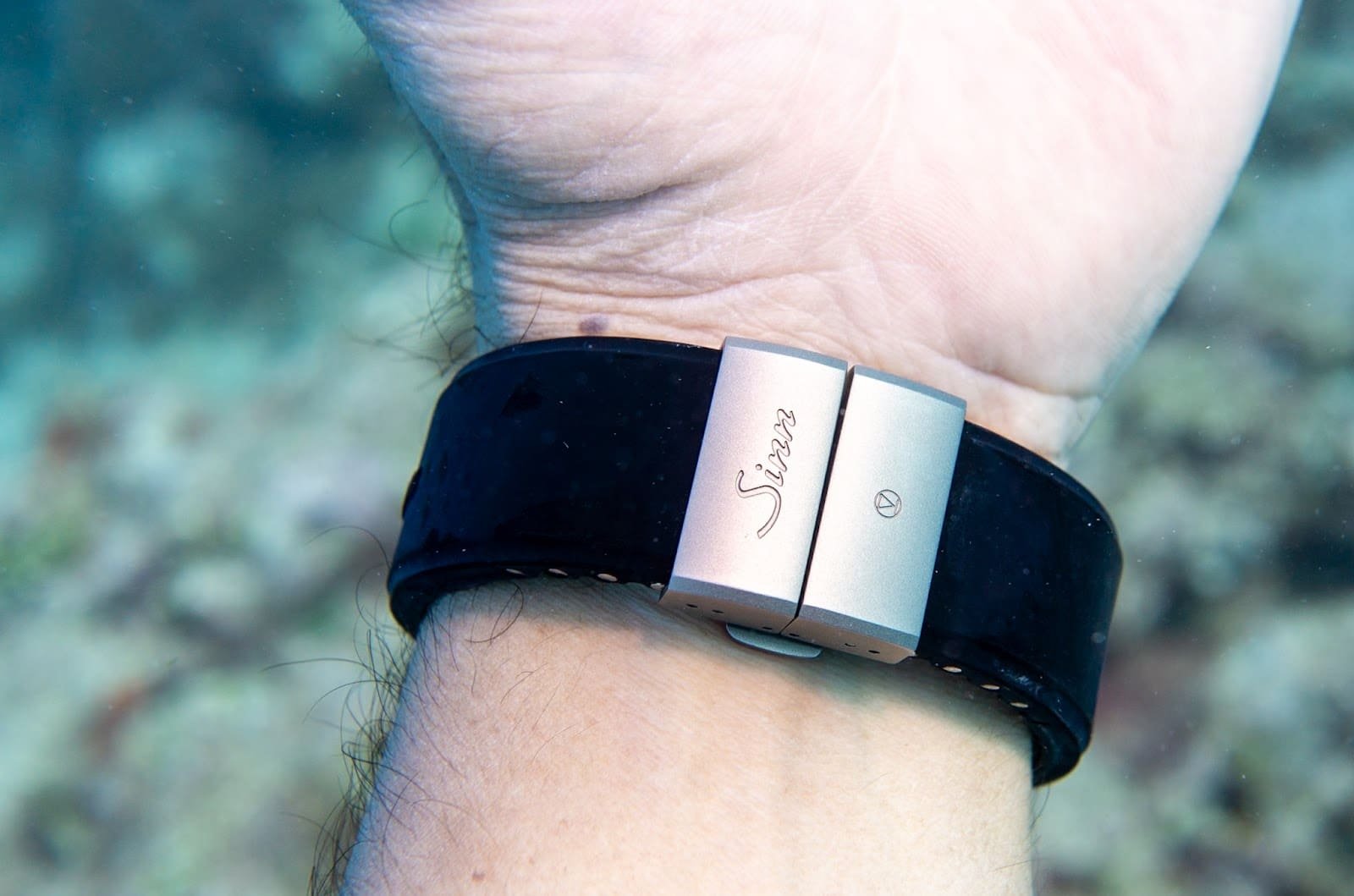
Sinn Dive Watches
The U series of Sinn watches gets its name from the U-boat German word as they are created using German submarine steel. There are various models with different features, but they are all packed with similar technologies.
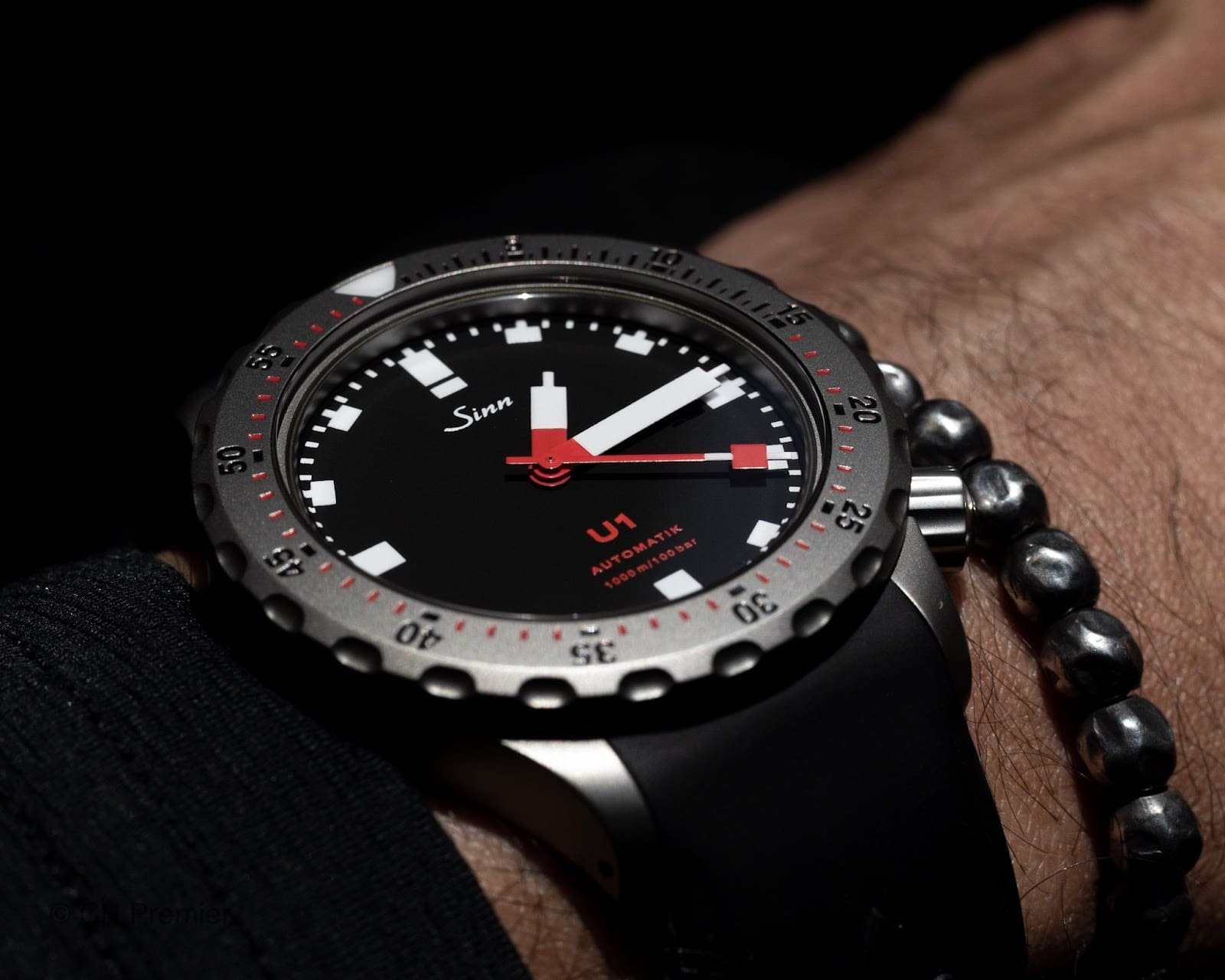
Some examples include the humidification indicator capsule at 8:30, tegimented steel, which makes them hard wearing and virtually unscratchable, and one includes oil in the dial, which increases water resistance and visibility to extreme levels.

While Sinn offers the same models in a few variations, for example with non-tegimented cases and in black PVD tegimented bezels and cases, I have chosen a common look and feel for the the watches in this review: matte silver of the tegimented steel, black dial, with white markers, hands, and text, and various red accents for text and in hands.
U1
The U1 was the first model I acquired back in 2012. It has a simple three-hand dial with iconic squares in each of the hands. At 44 mm in diagonal and 14 mm high, and with the crown at 4:30p this is an easy-to-wear watch. With 1000 meters of water resistance, the construction is solid as you would expect. The legible dial includes unique baton markers and hands configuration with enough luminescence to give an hour or two in the dark after a change.
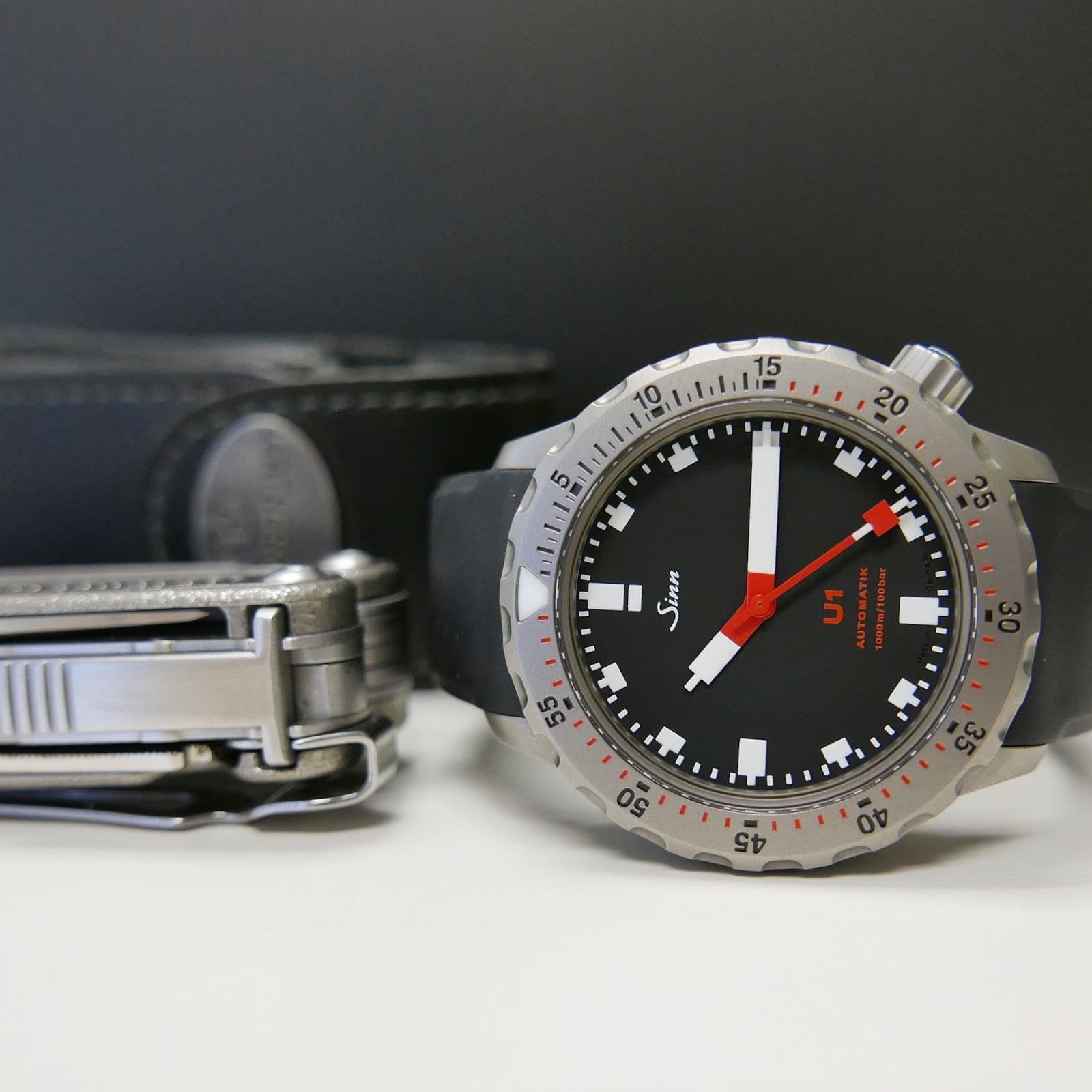
My somewhat limited, tegimented model also came with a tegimented bracelet, but I found the rubber much more comfortable. Since I have owned it for over 13 years, I have had this piece serviced once when I visited Frankfurt; this was to help the low-performing power reserve, and everything else has remained like the day I purchased it.
U2
The U2 is the GMT version with a red 24-hour dial at the center and an unobtrusive third short and black hand with a red arrow showing the second time. The hands are sword-shaped, unlike the U2, but the case sizes and crown are similar to the U1. The water resistance and feel on the wrist are identical to the U1.
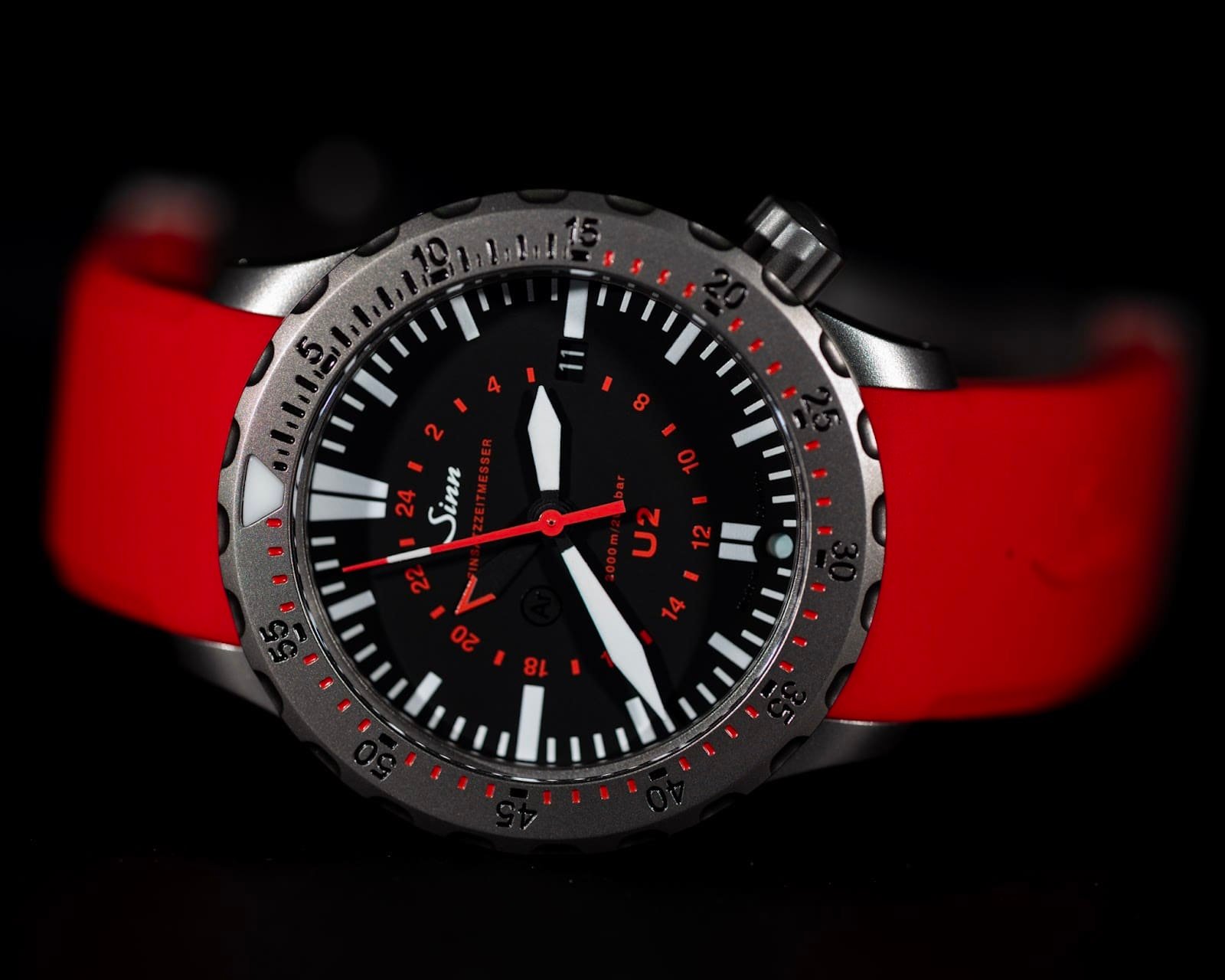
The U2’s GMT feature implementation is the so-called “caller GMT”. In the sense that the GMT hand, while showing an additional timezone, is not easily settable independently, as in the typical “flyer” GMT implementations. The result is that while useful for traveling to know the home time, the local time is not settable to jump (forward or backward) without affecting the GMT hand.
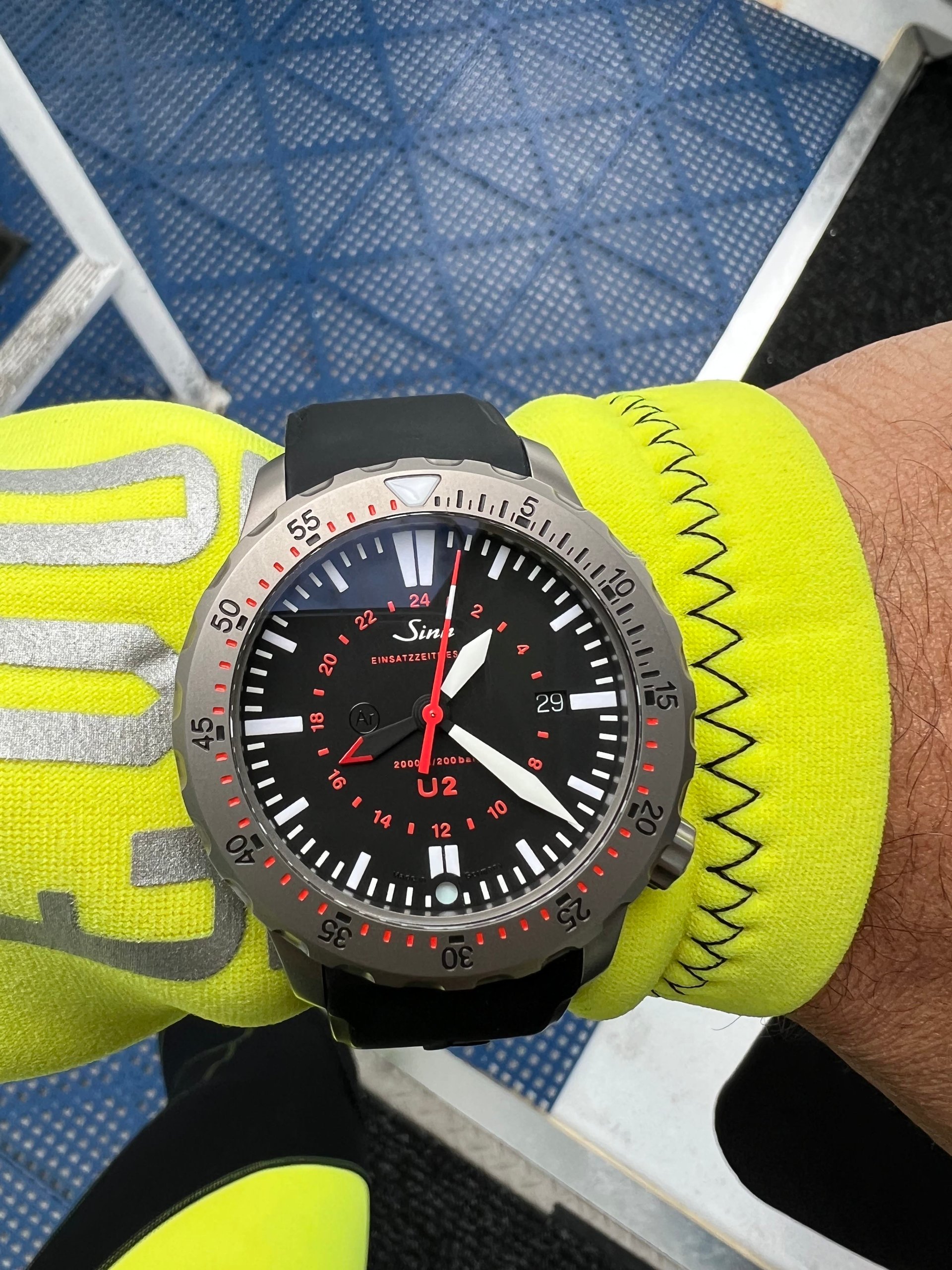
However, like all Sinn watches, the robustness and tegimented construction still make this a great watch to travel; in particular when worried about security or being exposed to the elements- natural or otherwise. Like all Sinn tegimented watches, from experience, it is unscratchable and seemingly indestructible.
UX
The Sinn UX (or mission timer UX EZM 2B) is the latest acquisition in my U* mini collection. The UX is the quartz U watch from Sinn that has an additional distinctive feature: a flat dial that is filled with oil, making it legible at all angles. Taking it diving this past winter (2024) is even more impressive. Underwater, there seems to be a dial, no crystal, you feel like touching the hands when looking at it, and a similar feeling happens at all angles, above or below water.
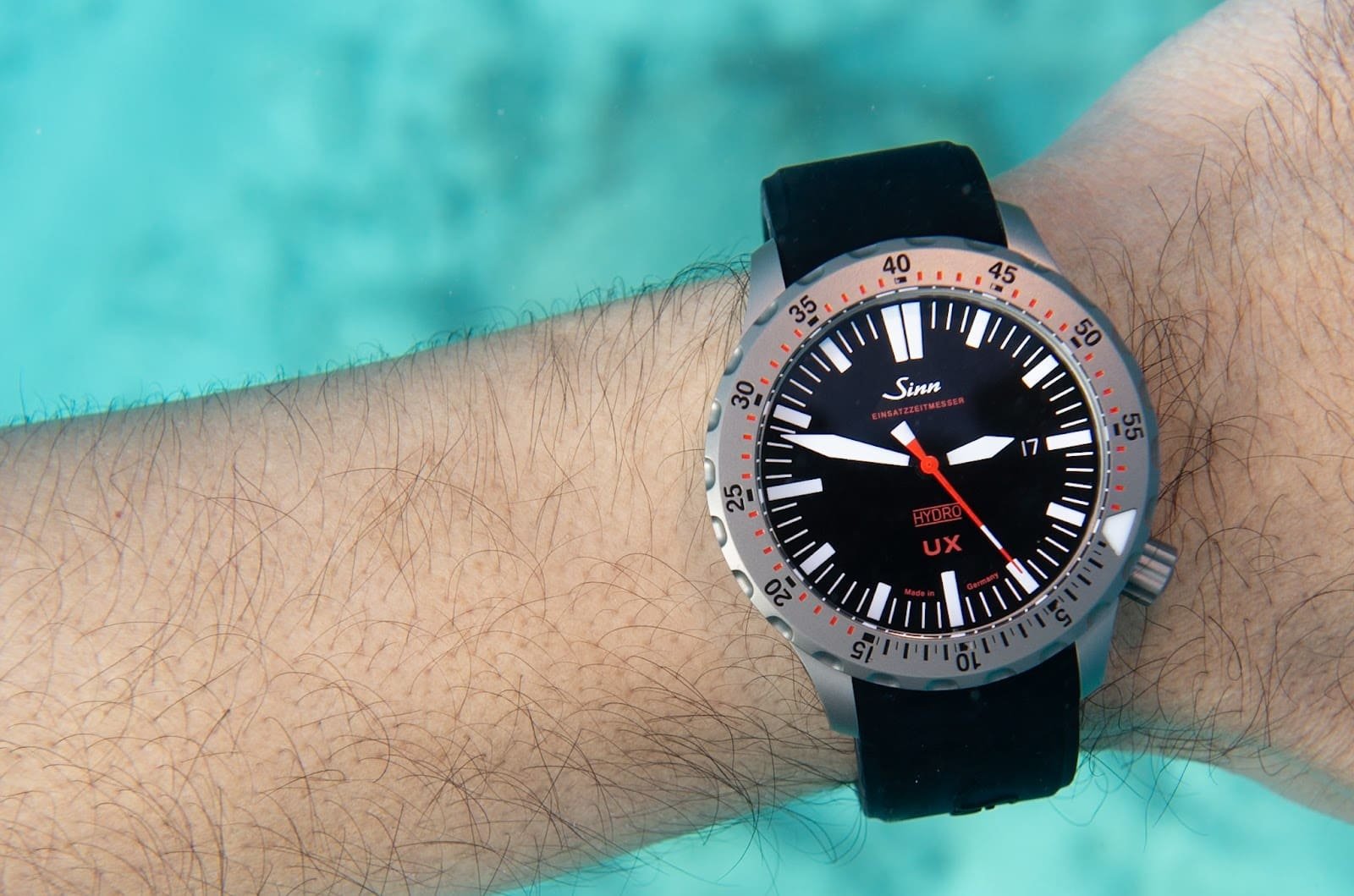
Additionally, since the UX uses a thermocompensated quartz movement, this means that in practice, the UX is supremely accurate at a wide range of temperatures, and it is the thinnest U* reviewed here at 13 mm high. The crown is at 4:30, like the U1 and U2, which increases the wearability; however, since it is a quartz watch, there is a lack of feel when operating the crown. Sinn rates the battery life at five years, and it includes various shock-resistant features to help ensure the seconds hand will stay aligned with the markers during the entire battery cycle.
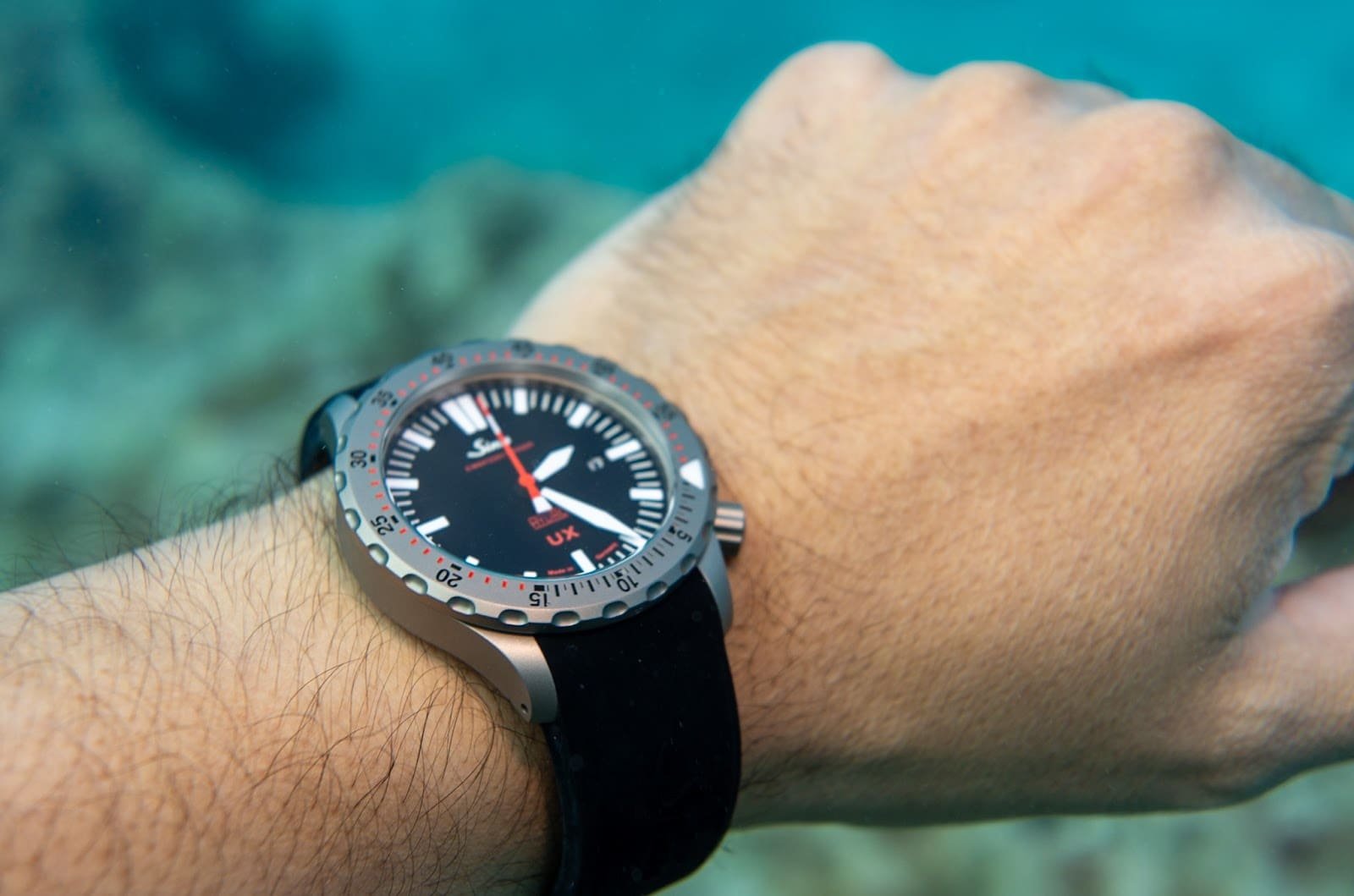
In practice, I found the UX to be an excellent go-to watch in a hurry simply because I don’t have to spend time setting it, except for the date every other month. The water resistance on this model surpasses all the others. Sinn rates it at 12,000 meters which is absurd; however, since Sinn actually tested it for that rating, this is a watch that is likely the most sturdy and hard wearing model in the set reviewed here.
U1000
Easily my favorite of all the U series watches I’ve had the pleasure of using. While chunkier (18 mm high) and heavier at 182 grams, all the other models are around 150 grams more or less, I find it to be wearable on my almost 7-inch wrist. This is due to its short lugs and a relatively small lug-to-lug dimension of 50 mm.
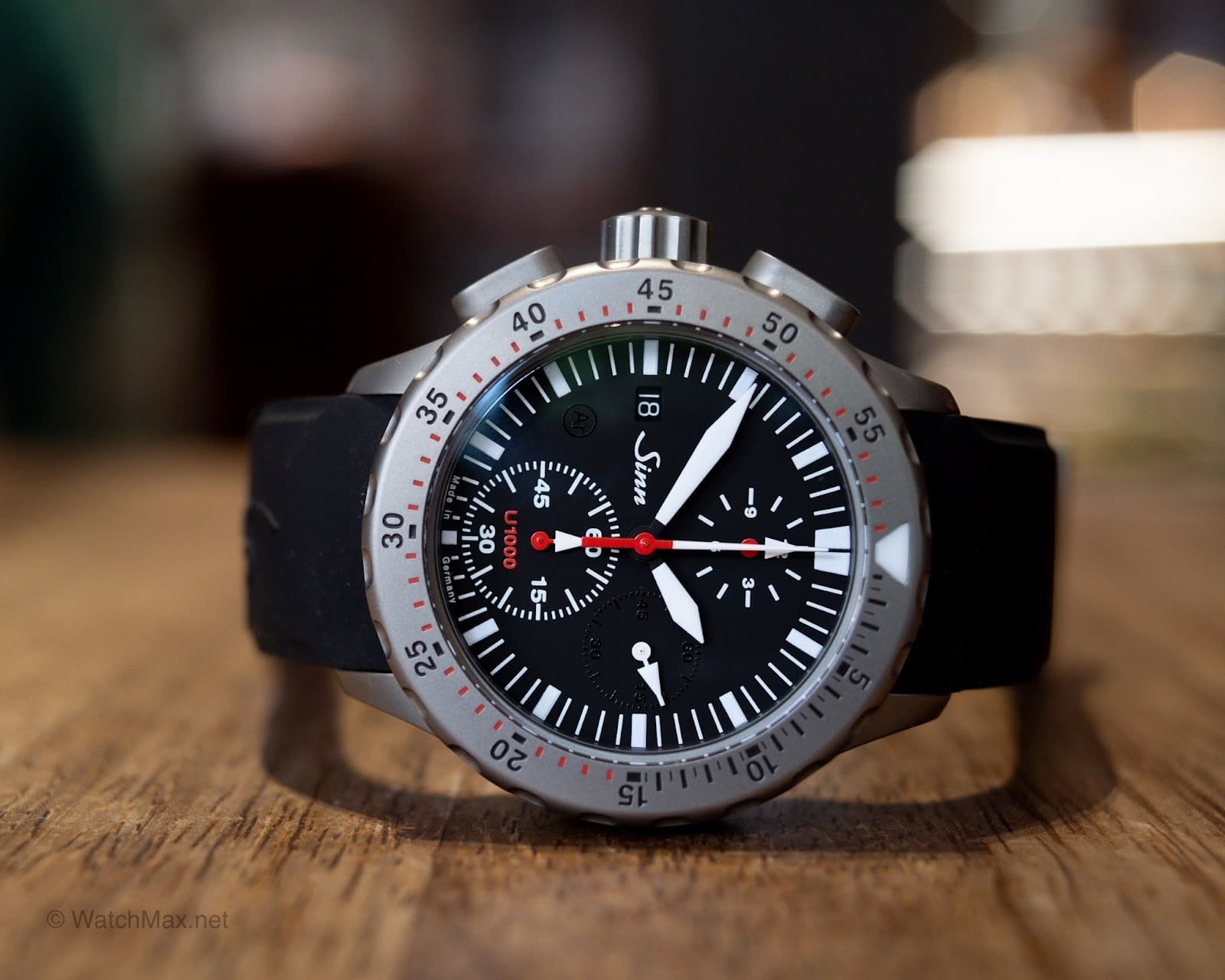
Another aspect of the U1000 that moves it to the top of my list is the legible dial with the 60-minute chronograph at 6 o’clock and the 12-hour counter at 12 o’clock. Both chronograph subdials are in white text, which contrasts well with the black dial. The running seconds hand at 3 o’clock is done in black text with a white hand, making it less obtrusive than if it were also done in white text.
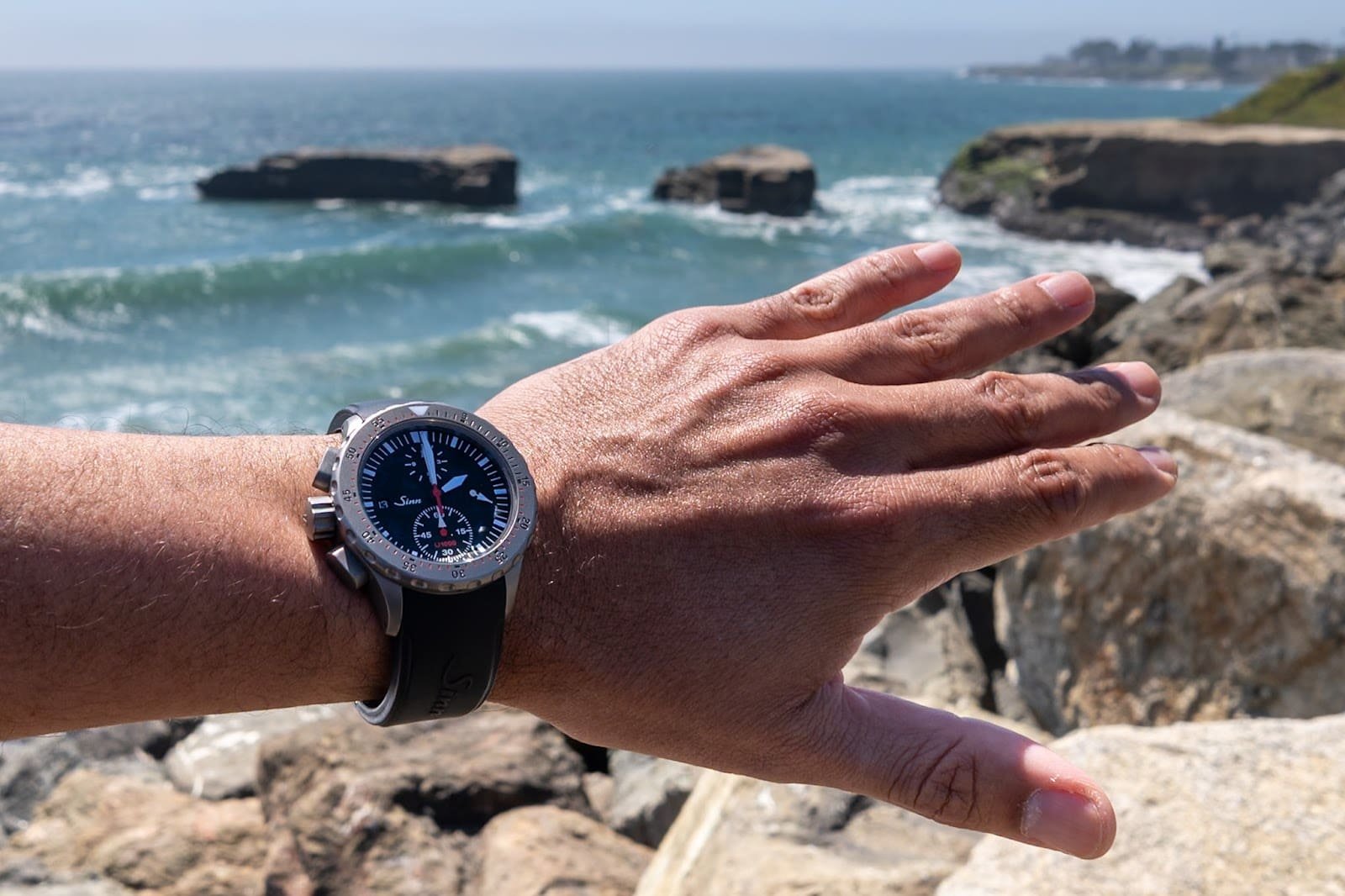
The most interesting and different aspect of the U1000 is the fact that the large crown and pushers are not on the right side of the dial but rather on the left. This can be confusing, especially since the start and stop and reset pushers are also reversed. The date is also shown on the left at 9 o’clock completing the reverse look of the dial.
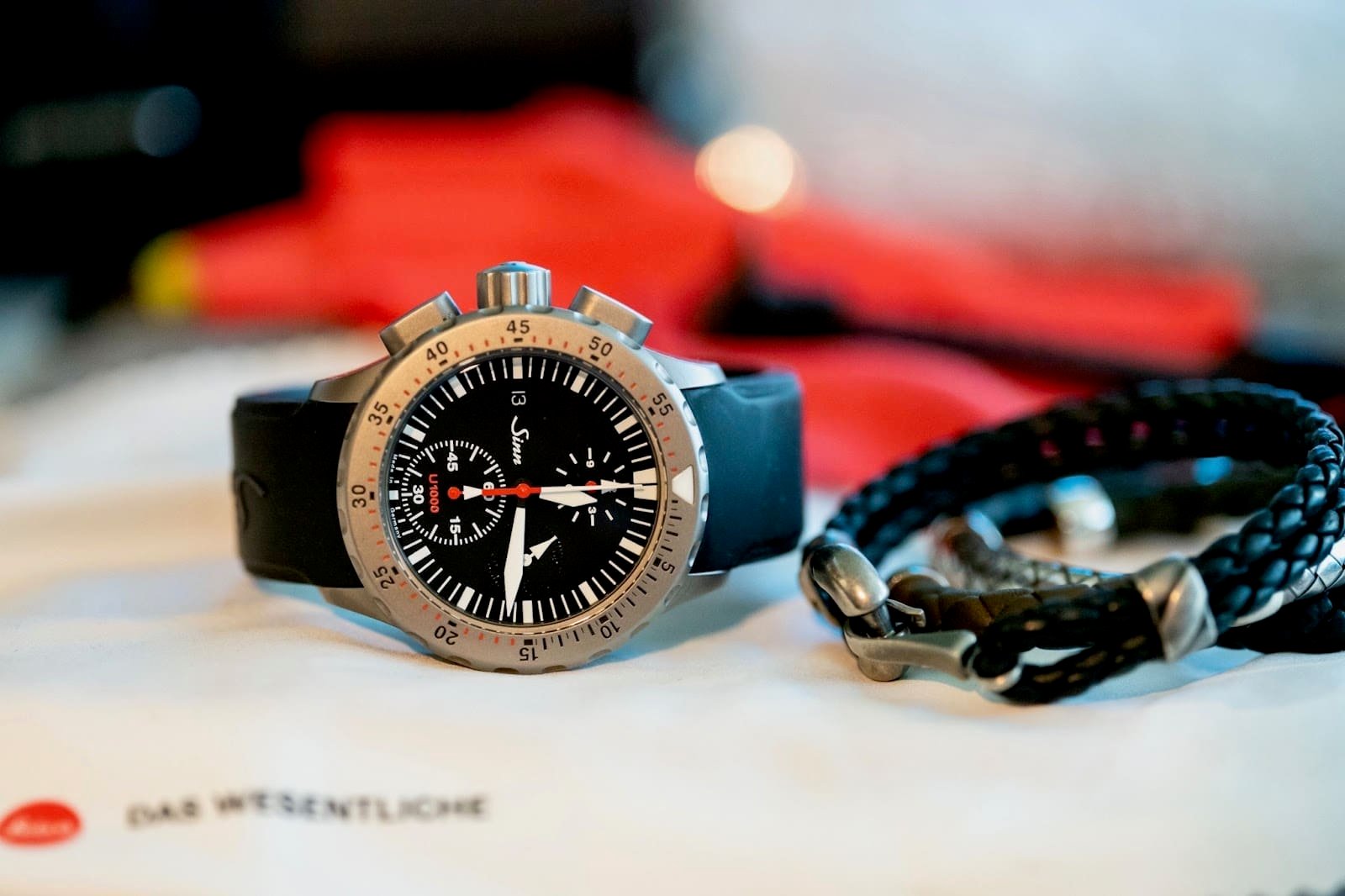
However, after getting used to this orientation, it’s easy to see that this approach is preferable to the alternative since it means the pushers and crown will not dig into one’s wrist. This design choice, in my opinion, is partly why this large watch is so wearable. Plus, the result is somewhat unique and makes the U1000 distinctive.
Another, not so well known, fact about the U1000. The pushers are usable underwater! And the U1000 is water resistant to 1000 meters. Sinn does not advertise that the pushers are usable as such but in various discussions with them this is a test that is done before the watch is completed. I can attest to using the pushers while diving without any issues—though in shallow 5-10 meters dives.
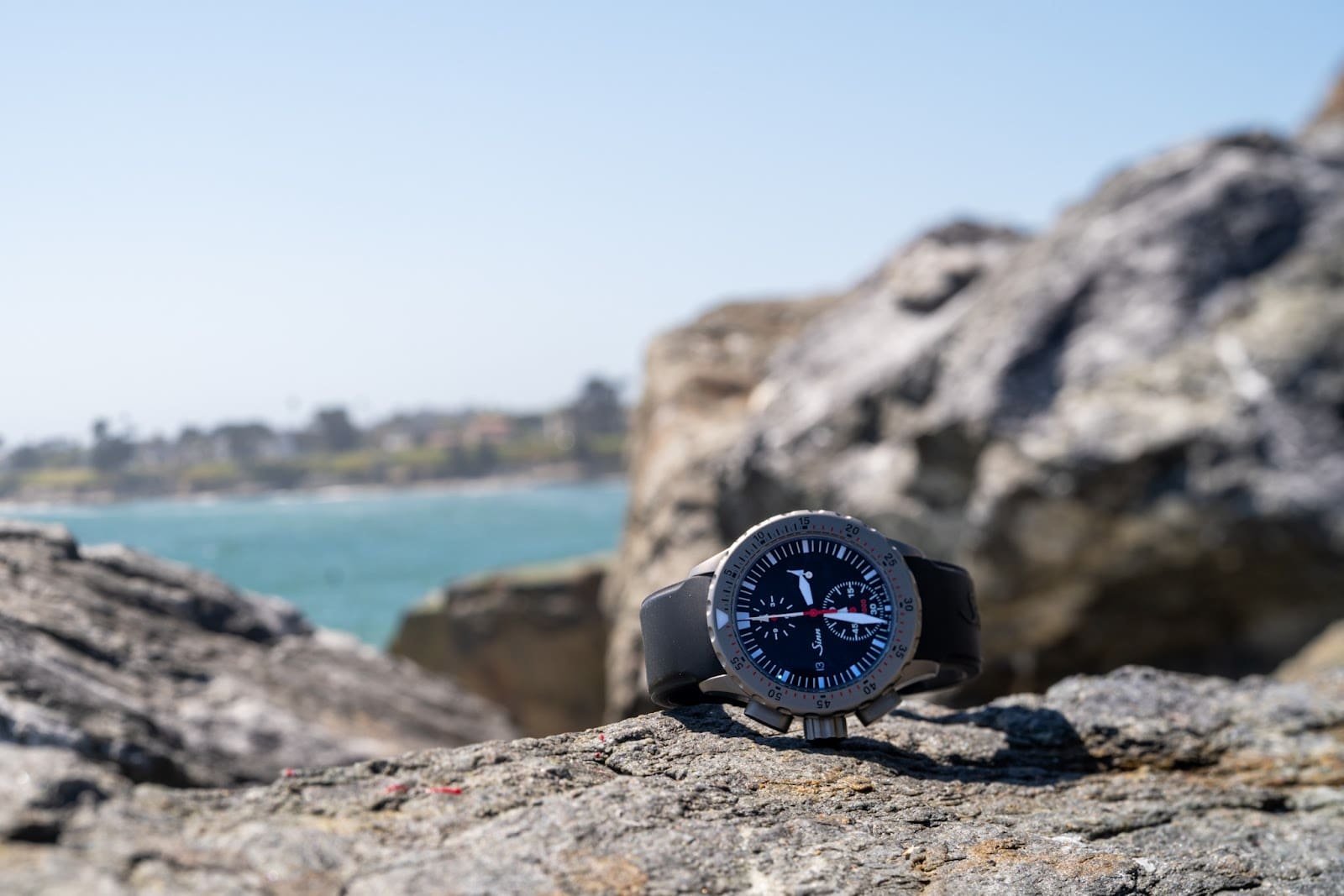
Lastly, the U1000 includes the humidifier capsule (found in the U1, U2, and UX) and a different bezel than the other U series watches reviewed here. Specifically, the rotating dive bezel requires a push and hold to turn. And of course, it is unidirectional. The push-down adds safety to avoid accidental operation while diving and using the bezel to measure submersion time. And while it might seem superfluous or make the bezel more difficult to use, in practice, I found it easy to operate, even underwater and with gloves on.
Experiences diving with the U* watches
As a frequent diver, for the past 15 years, I have come to appreciate wearing both an analog and a dive computer during every dive. In my current setup, during my winter dives in Key Largo, Florida, I wore the UX and the Garmin Dive Mk3 computer on the right wrist. This works well since the Garmin is feature-packed with air integration and every other feature you could want during a dive. On my left wrist, I know I can always get the essentials: current time of day and dive time when using the bezel. This simplicity, not to mention the lack of worry about battery life, is the reason a mechanical watch while diving still makes sense today.
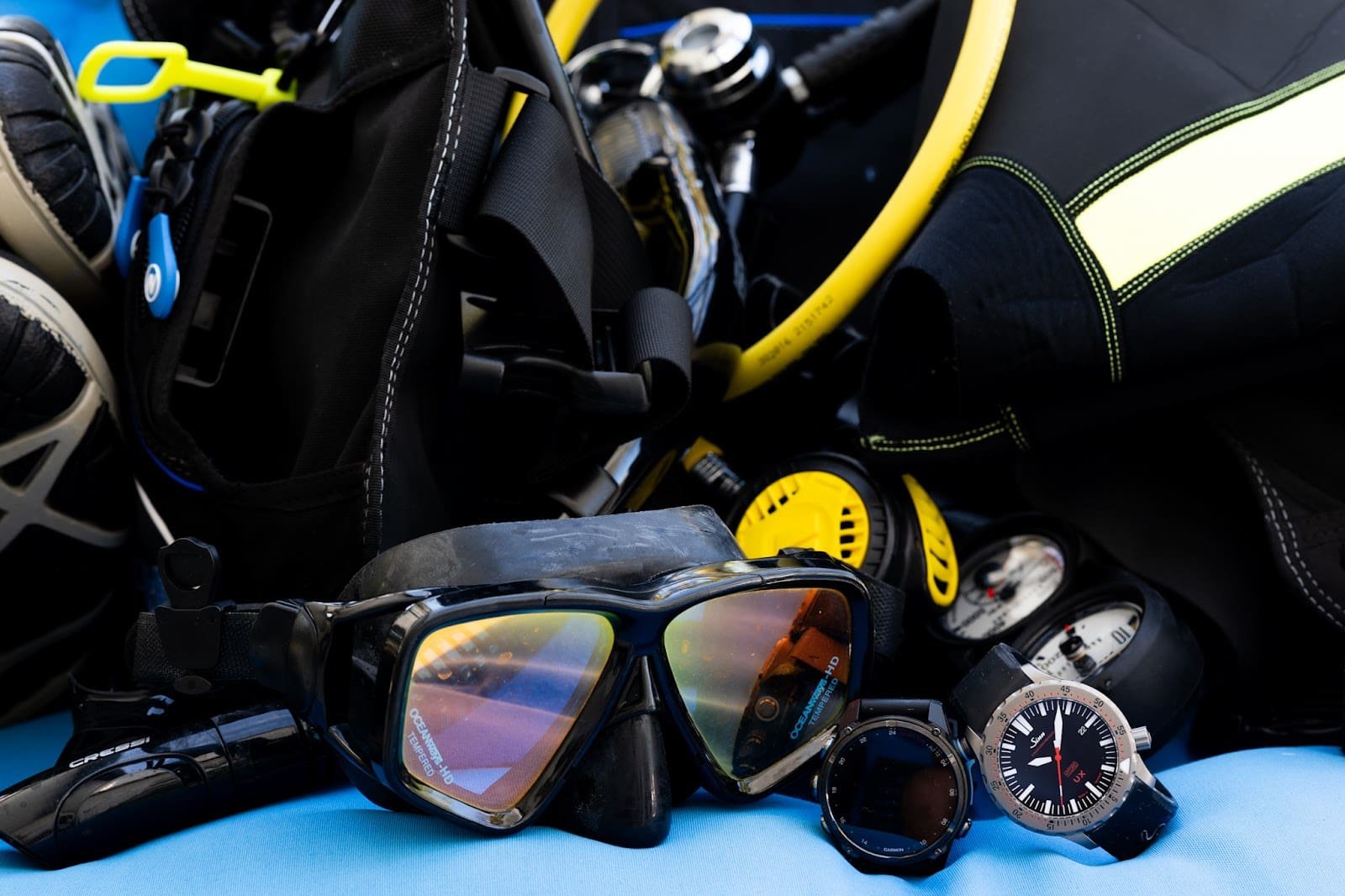
Anyone who dives knows that dive watches (any dive gear for that matter) take a beating on a dive boat. You can be careful, but the hustle and bustle of prepping for each dive, dealing with waves, trying to listen to security and location instructions, and the tight spaces one has to navigate for each dive mean your watches quickly become far from memory and simply are the tool they are designed to be. I have scratched many watches during my dives. Simply by wearing and removing the BCD. However, I have dove with every one of my Sinn U* watches and not one has a scratch to be seen. I never have to worry, and this is a big win for me, diving with Sinn.
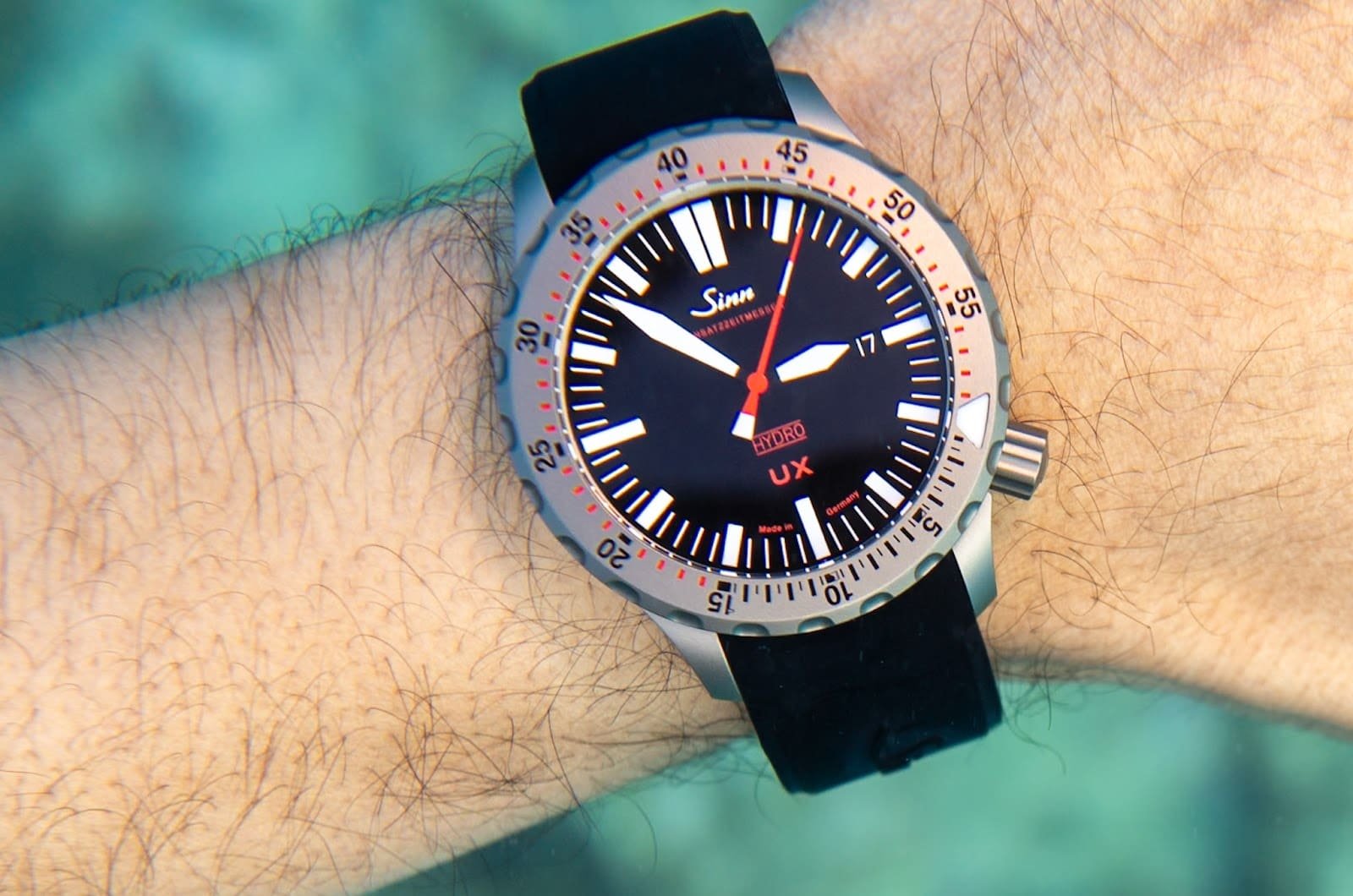
Another aspect of the Sinn U* watches that I cannot emphasize enough is the supreme legibility of the dials. This is true for various reasons but I find primarily it is due to how the white makers and white hands contrast heavily with the black dial. And the various red accents are subtle and do not distract while keeping the essentials easily readable; for instance, in the case of the U2, the 24 hours central ring disappears until you need it.
The easy operating bezel, which, while not as contrasty as the dial markers on the black dial, includes enough paint to stand out against the silver steel and avoids distraction while being legible during a dive. And with the U1000 I have used the chronograph to measure my time between dives or my total dive time when doing multiple dives on one boat trip. You can also use it to measure each dive, leaving the bezel for easy measurements of smaller intervals under water, e.g., timed skills or underwater activities.
While the U* watches reviewed here are all supremely legible during daily wear and while diving, the UX is the best for legibility underwater. This is followed by the U1000, which includes a dome crystal that enhances visibility above and underwater. The U1 and U2 flat crystals make them less legible underwater at certain tight angles when the dial becomes a mirror.
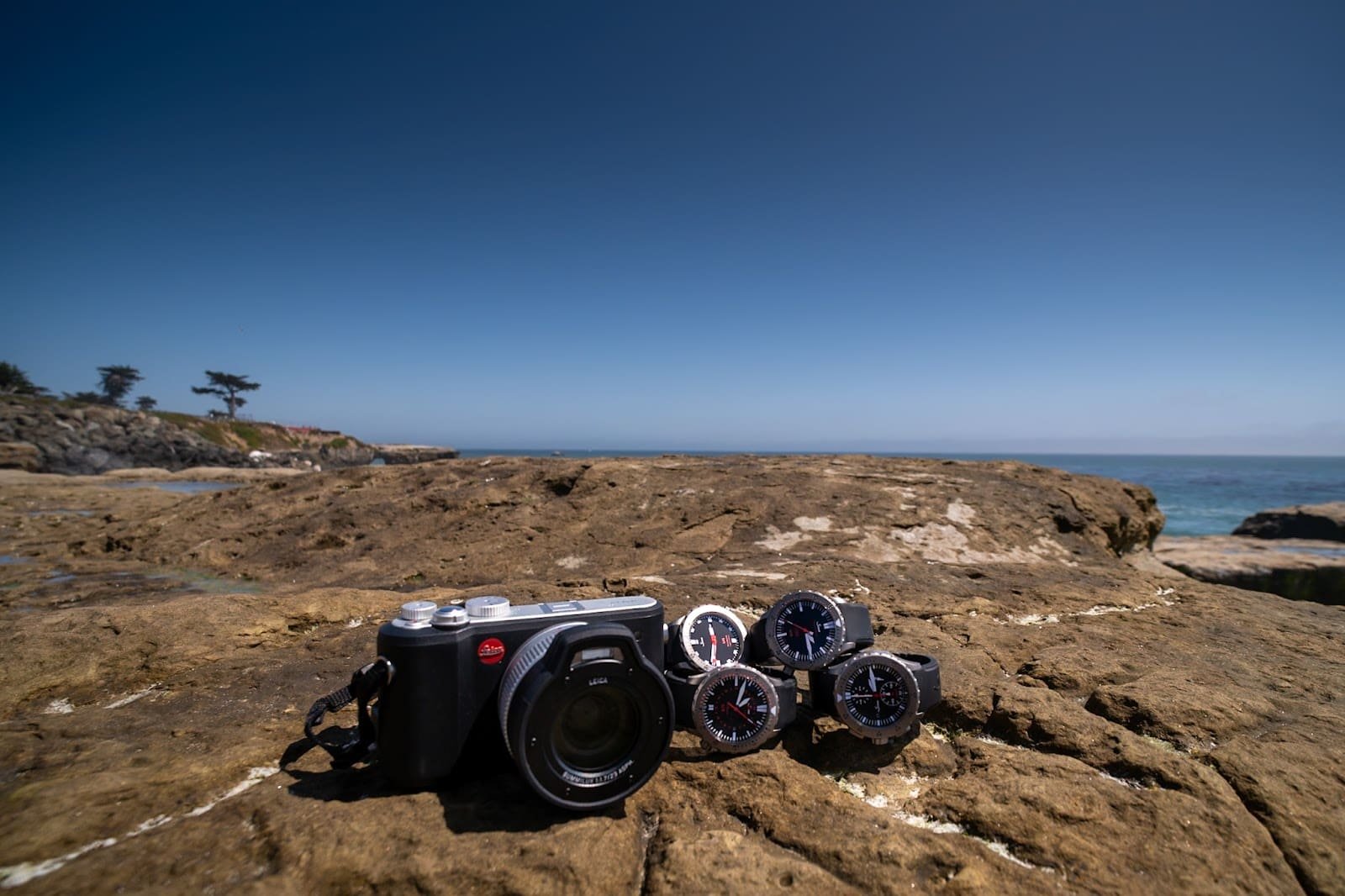
On all the models, the Sinn rubber strap, while comfortable, will get dirty, especially after diving, and will require a deep clean to make it look new. This is unlike some other dive watch rubber straps that I’ve only had to rinse after diving to remove all residues and salt. The lume on the pip and the markers, and hands are adequate but not as good as Rolex or other brands I have used. On a sunny day, the charge is quick but will dim significantly and disappear after a bit more than one hour.
Competition
Oris Aquis dive watches, which are priced similarly to the Sinn U*, also have their own unique design languages. They even include variations with different dial colors and technologies. For instance, Oris introduced an innovative depth gauge feature that uses a thin perforated “canal” around the bezel, which, when diving, will allow water to infiltrate and show the current depth. However, the Oris watches do not include the hardened tegimented steel technology that I find so essential in the Sinn.
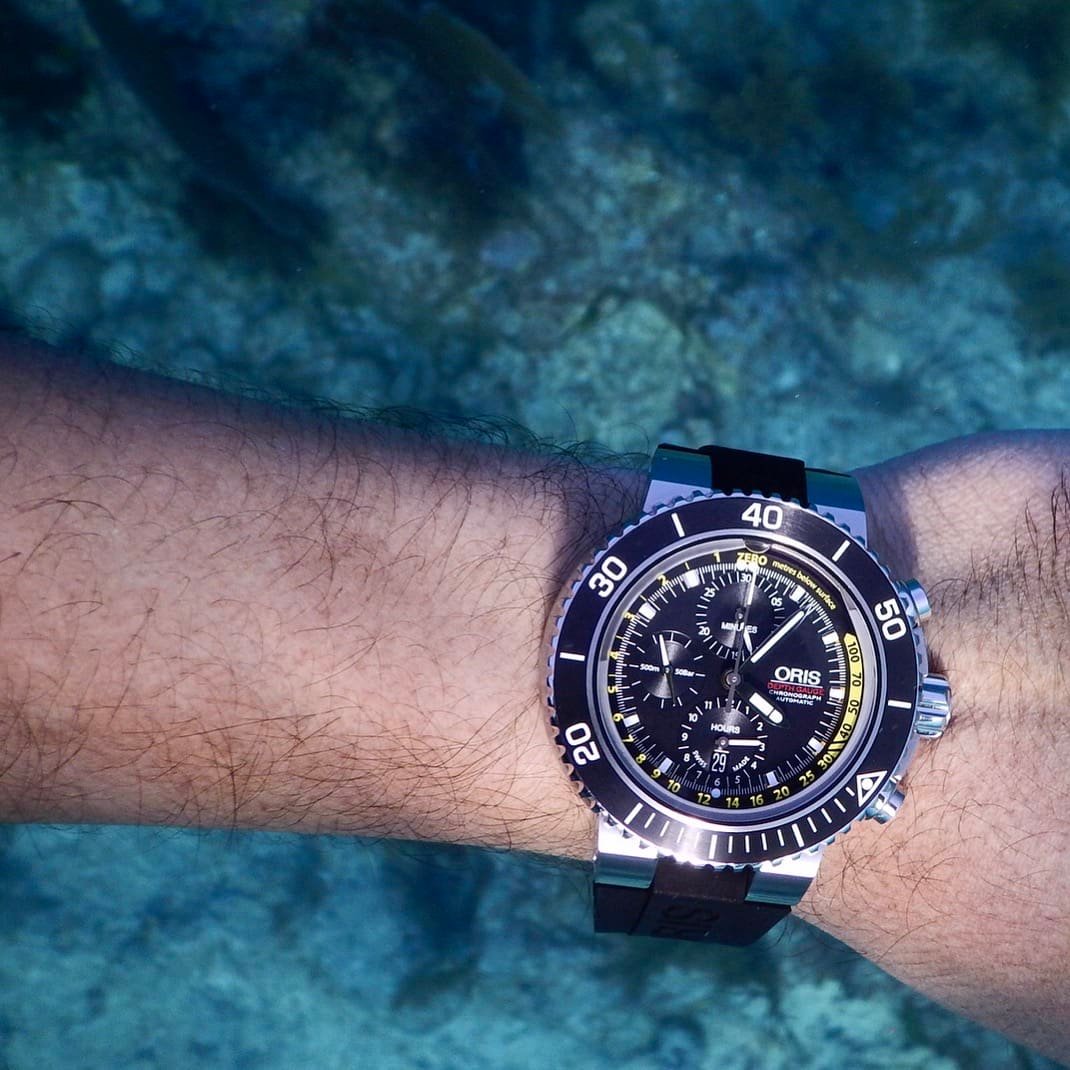
While there are many other dive watches in the same price point and even lower, no other brand, in my opinion, offers such an extensive collection of rugged, technology-packed dive watches. Some brands like Damasko and Mule Glashutte also offer hardened steel dive watches but none of these brands offer the extensive variation that Sinn does.
Conclusion
What makes the Sinn U* dive watches my go to day-to-day beater, every day watch, and preferred dive watches? The best summary is the consistent look, design language, technology, and ruggedness. There is little not to like. And if the 44 mm size is an issue Sinn makes the U50 (smaller 41 mm) series which at first was attractive to me but after trying a few models, quickly made me realize that the original size was perfect for my wrist.
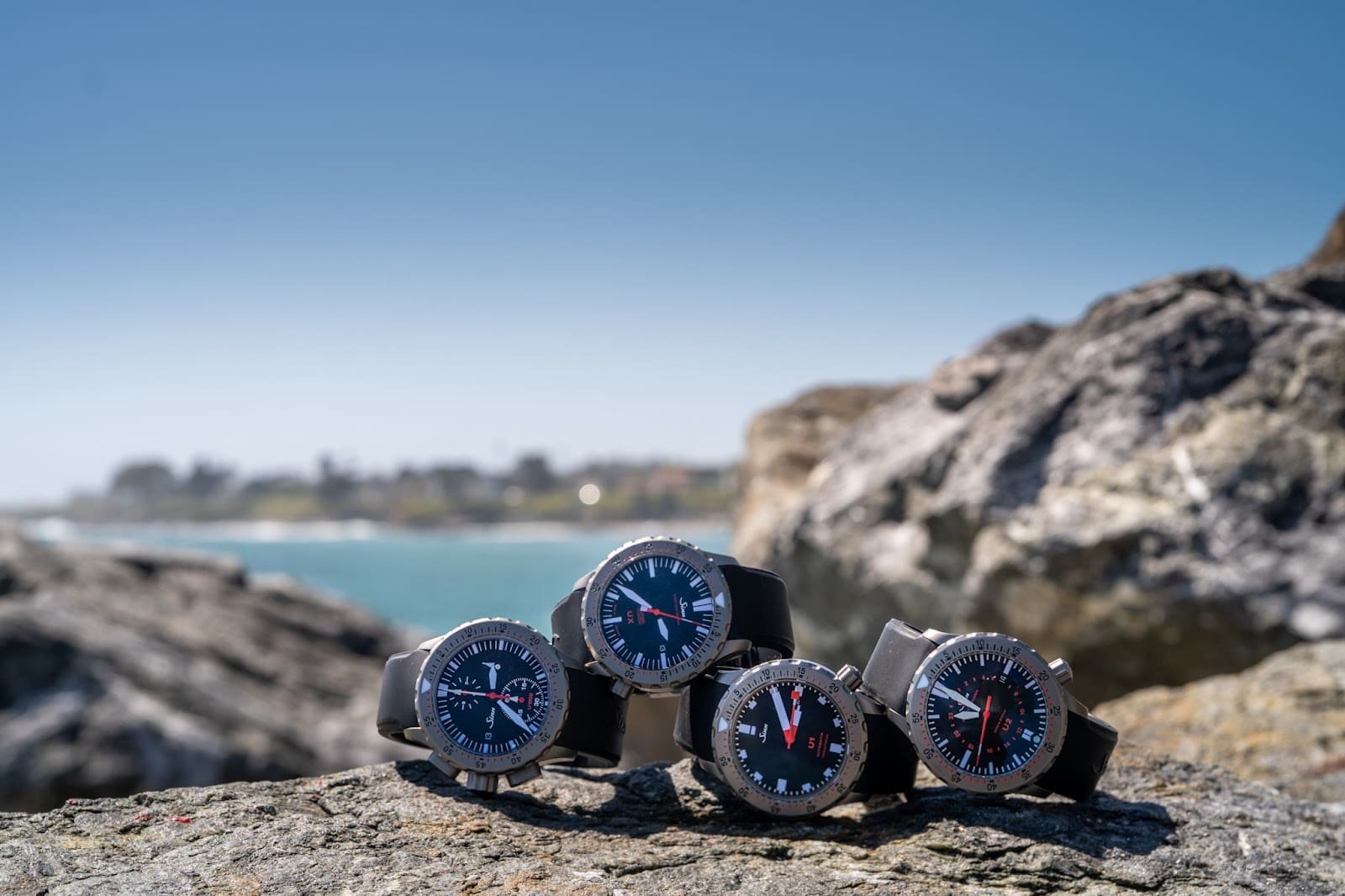
Finally, it’s worth noting that I purchased my first Sinn (U1) almost 15 years ago, and I find it as fun to wear as it was back then. Interestingly, my Garmin Mk3 is the 12th Garmin watch that I have owned and the 3rd Garmin Dive model. While the latest Mk3 is great, I doubt I could use the first-generation Mk1 and be satisfied with it today. In 10-20 more years, the Sinn will still be usable and wearable, and attractive. I am sure. This is the value of mechanical watches.
About the gear used
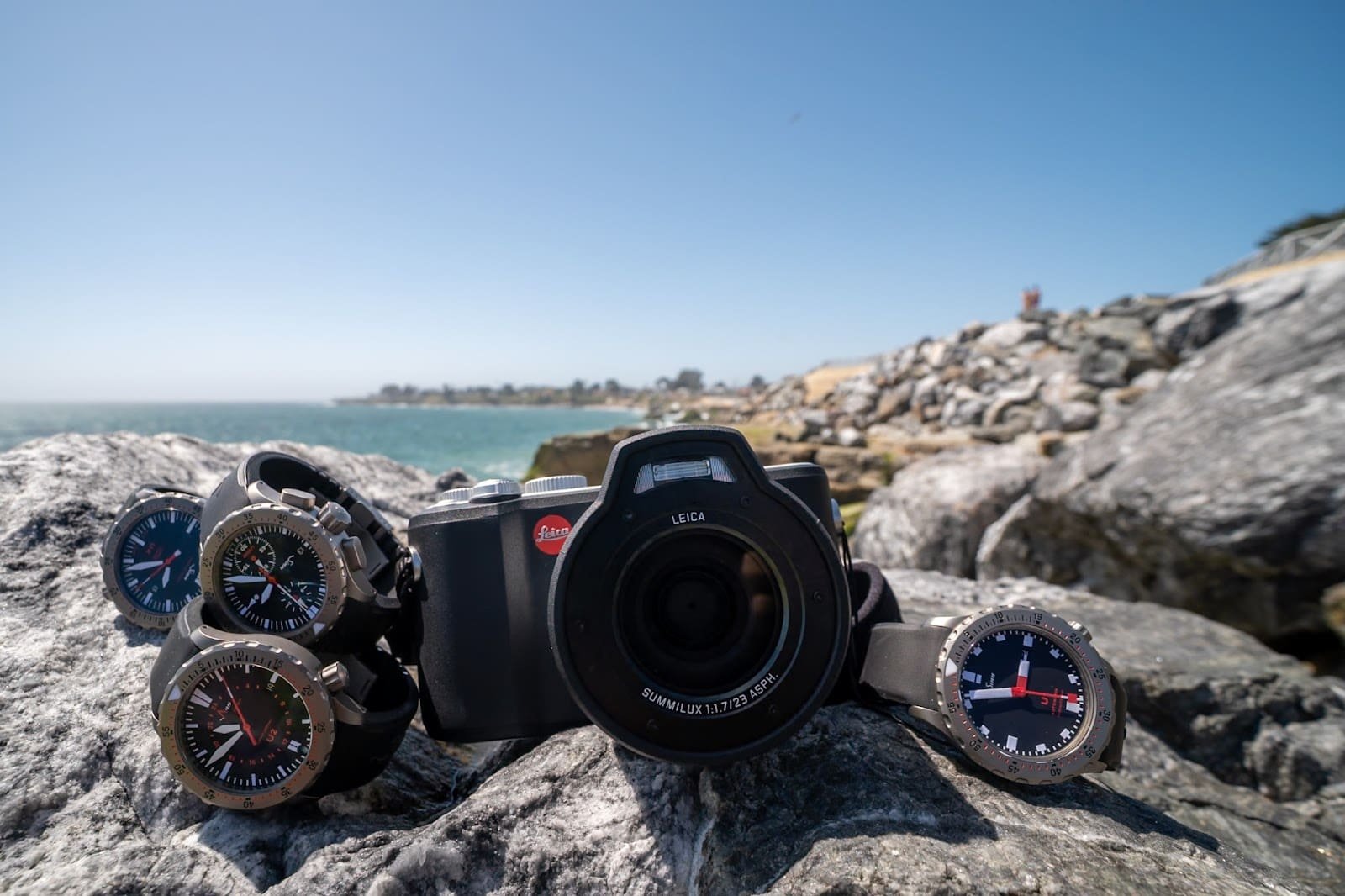
For the underwater photographs, I used my trusty Leica X-U rugged underwater camera. The UX photograph with the diving gear I used was my Leica SL2-S with Panasonic LUMIX 100 mm f/2.8 macro lens. The U1, U2, and U1000 solo photographs were taken with my Leica S007 and S3 with the excellent 120 mm APO-Summarit-S f/2.5 Macro lens. For the group photo close-up of the four watches (last one), I used my Leica SL2-S with the Laowa 50 mm Tilt-Shift Macro f/2.8 lens. The same setup was also used for the solo U1000 shot in the wild. For the wide-angle group shots, I used my Leica SL2-S with the Laowa 15 mm f/4 Wide Macro lens.